
Restaurant Marketing for Canadian Operators
Restaurant Marketing in Saskatoon: What Actually Works for Prairie Operators
By Kyle Senger
15+ years in local marketing; Google Ads certified; Shopify Partner.
TLDR
Saskatoon restaurant operators paying 25 to 30% commission on SkipTheDishes orders can recover CAD $3,060 per month by shifting 30% of delivery volume to direct ordering platforms like GloriaFood or ChowNow, which charge 1.5 to 3.5% per order.
- Commission math: a Saskatoon pizzeria doing CAD $40,000 per month in delivery at 28% blended commission pays $11,200 monthly to platforms, per operator-reported figures cited in this article.
- Google opportunity: per DataForSEO, "restaurant online ordering" runs CAD $10.57 CPC nationally, with Saskatoon operators typically paying less because fewer restaurants are bidding.
- Sequence: fix Google Business Profile first, add direct ordering second, build a CASL-compliant email list third, then run ads.
- Instagram caveat: organic reach sits below 2% in 2026, per TouchBistro's 2026 Canadian State of Restaurants Report.
- Review gap: top Saskatoon independents carry 200 to 400 Google reviews; most mid-pack operators sit at 40 to 80.
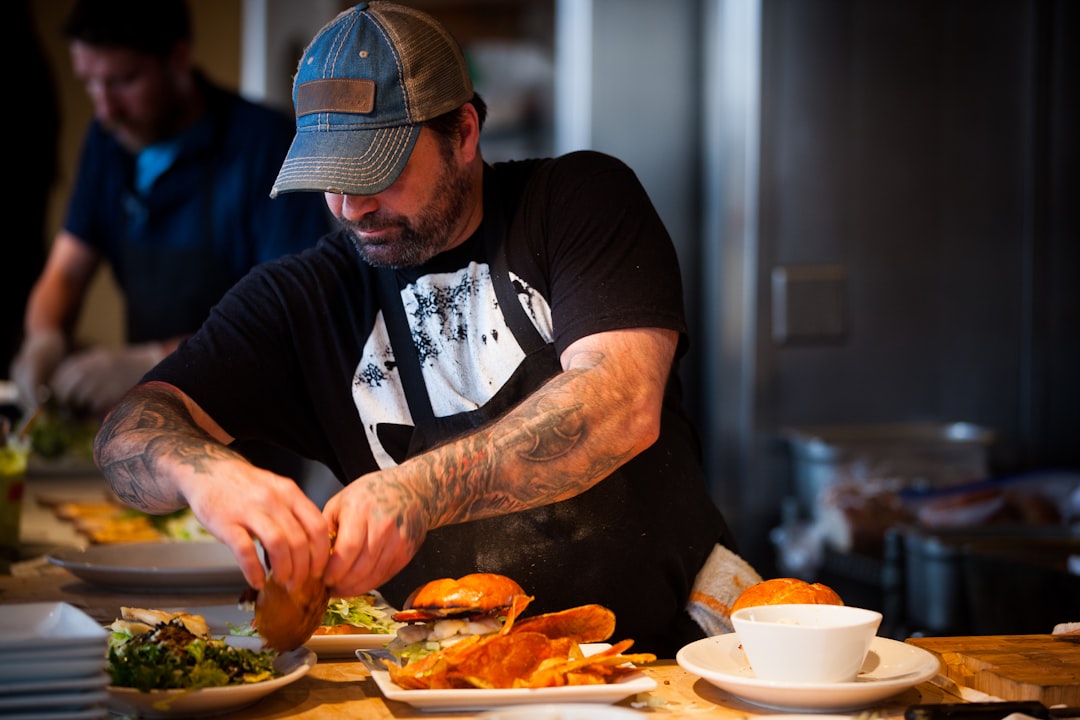
Picture this: you're running a restaurant on 8th Street. Friday night is solid. Saturday is great. But you open your DoorDash dashboard on a Tuesday and realize you've handed over more margin this month than you paid your sous chef. You're not doing anything wrong. You're just playing a game where the platform wins and you don't.
That's the specific problem this article is about. Not restaurant marketing in general , our complete guide to restaurant marketing in Canada covers the full picture. This one is for Saskatoon and Regina operators who want to know what's actually working here, in this market, with the budgets and platforms that are real in the Prairies.
Here's what I'm going to cover: the Saskatoon-specific competitive reality, where your marketing budget actually moves the needle in this market, and a week-by-week setup process for a Prairie operator starting from scratch or starting over.
The Saskatoon + Regina Market Is Different Than You Think
Most restaurant marketing content is written for Toronto or Vancouver. The tactics aren't wrong exactly, but the math doesn't translate.
In Saskatoon, SkipTheDishes is the dominant third-party delivery platform. Not DoorDash. Not Uber Eats. Skip was built in Saskatoon and still has deep roots here and across the Prairies. That matters because your commission structure, your listing quality, and your customer base on Skip looks different than it does in a city where DoorDash runs the room.
I've seen operators in Saskatoon paying 25-30% on Skip delivery orders, plus 6-15% on pickup orders they could have captured directly. That's the commission reality across all three platforms, but Skip's penetration in this market means it's often the biggest line item. And unlike Toronto where DoorDash and Uber Eats compete hard enough to sometimes negotiate, in Saskatoon, Skip has enough market share that you're largely taking what they offer.
The other thing: Saskatoon and Regina are smaller markets. That's actually an advantage for Google search. When someone types "pizza near me" or "best sushi Saskatoon," the competition for that search result is a fraction of what it is in Calgary or Edmonton. Your Google Business Profile and your local SEO can actually move if you work them. For a full breakdown of what that looks like tactically, our restaurant local SEO and Google Business Profile guide covers the mechanics in detail.
The flip side: your customer pool is smaller. A bad Google review in Saskatoon can genuinely hurt Friday-night reservations because the city talks. Word travels faster. That cuts both ways , a loyal customer base here is worth more per person than in a bigger city, but reputation damage spreads faster too.
The Commission Math, Run Specifically for a Saskatoon Operator
I want to do this math with real numbers because vague warnings about "high commissions" don't actually change behaviour. Seeing the dollar amount does.
Assume a Saskatoon pizzeria doing $40,000/month in delivery sales across Skip, DoorDash, and Uber Eats. That's not an unusual number for a busy independent.
At a blended commission rate of 28% (which sits in the middle of the 25-30% range operators in this market report paying on delivery), that's $11,200/month going to the platforms. Every month. That's $134,400 per year.
Now assume you shift 30% of those orders to a direct online ordering system. Something like ChowNow, GloriaFood, or Toast Online Ordering , platforms that charge 1.5-3.5% per order instead of 28%. Call it 2.5% blended.
That's $12,000/month in direct orders at 2.5% = $300 in platform fees instead of $3,360. You've saved $3,060/month on that slice alone , without changing your food, your staff, or your hours.
That's your marketing budget. The $3,000/month you're currently spending on commissions for orders you could have captured directly is more than enough to run Google Ads, manage your reputation, and build an email list that keeps those customers coming back without paying Skip again next month.
For a full breakdown of how to set up direct ordering and what platforms work best for Canadian operators, see our online ordering comparison for Canadian restaurants.
Where Saskatoon Restaurant Marketing Budget Actually Goes (And Where It Shouldn't)
Here's what I see when I look at how Prairie operators are spending their marketing dollars.
Google Ads: yes, and it's cheaper here than you think. Per DataForSEO data, "restaurant online ordering" runs around CA$10.57 CPC in Canada. "Restaurant loyalty program" is around CA$14.14. These are national averages, and in a smaller market like Saskatoon, your actual cost per click is often lower because fewer restaurants are bidding. If you're spending $500-$800/month on Google Ads in Saskatoon with a well-built campaign, you can genuinely own the search results for "pizza delivery Saskatoon" or "best brunch Regina" in a way that's nearly impossible in Toronto at the same budget. Our restaurant Google Ads guide covers how to structure those campaigns so you're paying for bookings, not just clicks.
Instagram: I'd pump the brakes. Organic reach on Instagram is sitting below 2% in 2026, per TouchBistro's 2026 Canadian State of Restaurants Report. That means if you have 2,000 followers, roughly 40 people see an organic post. Paying an agency $1,500/month to post three times a week for that reach is not a good trade. Instagram still matters for brand discovery and for showing up when someone searches your restaurant name, but it should not be your primary acquisition channel. For a more honest breakdown of what social actually does for restaurants in 2026, see our restaurant social media marketing guide.
Email and SMS: underused in this market. Most Saskatoon independents I've talked to have a Square or Lightspeed POS that's been collecting customer emails for years, and nobody has ever sent a single campaign. That's a direct line to people who've already eaten at your restaurant, and it costs almost nothing to use. The catch is CASL , Canada's anti-spam law requires express consent, a clear unsubscribe mechanism, and proper sender identification in every message. Fines start at $1M per violation, so you can't just export your POS list and blast it. Our restaurant email and SMS marketing guide covers how to do this properly.
Reputation management: this is the one most operators ignore until it's a crisis. One bad Google review can move the needle on a slow week in a city this size. And the reviews that sting most are the ones that aren't even your fault , like the Uber Eats driver who dropped someone's food in the snow and the 1-star review ended up on your Google Business Profile. For a full playbook on responding, recovering, and building your review count proactively, see our restaurant reputation management guide.
The Menu Fragmentation Problem Is Costing You More Than You Realize
An independent operator in Winnipeg put it this way: changing the price of one pizza by a dollar took 35 minutes across DoorDash, Skip, Uber, the website, and the POS. And they still forgot Uber. Three weeks of orders went out at the wrong price.
That's not a technology problem. That's a source-of-truth problem. And it's one of the most expensive invisible costs in a restaurant operation because it creates wrong prices, out-of-stock items that guests can still order, and listings on third-party platforms with outdated photos or descriptions.
In Saskatoon, this problem is real and most operators are managing it manually. The fix isn't complicated, but it does require picking one system as your menu master and making sure every other platform pulls from it. The detailed breakdown of how to set that up , including which POS systems handle this well and which ones make it worse , lives in our menu sync guide for Canadian restaurants.
A Week-by-Week Setup for a Saskatoon Restaurant Starting Over on Marketing
This is the process I'd walk through with a new client in Saskatoon who's been relying on Skip and hasn't done much else. Not a strategy deck. The actual work, in order.
Week 1: Claim and fix your Google Business Profile. Log in to Google Business Profile and verify you own your listing. Check your hours, your photos (real photos of your actual food, not stock), your menu link, and your address. Make sure your phone number matches what's on your website exactly. One mismatched digit and Google treats them as two different businesses. Set up Google Q&A responses for the most common questions. This costs nothing and it's the single highest-return hour you'll spend on marketing.
Week 2: Audit your third-party listings. Log into your Skip, DoorDash, and Uber Eats merchant portals. Check that every item is in stock, every price is correct, and every photo is actually a photo of your food. Look for competitor restaurants being ghost-promoted on your map pin , this happens more than people think, especially on DoorDash. If your GBP or any listing has been flagged or suspended, start the reinstatement process now. It takes 6-8 weeks and you can't rush it.
Week 3: Set up direct online ordering. Pick a platform , GloriaFood is free to start, Square Online is solid if you're already on Square, Toast Online Ordering integrates well if you're on Toast. The goal is a direct ordering link on your website, your Instagram bio, and in your Google Business Profile. Start routing even 10-15% of your orders through this channel. Every direct order you capture is an order where you own the customer data.
Week 4: Start building your first-party list. If your POS has been collecting emails with proper consent, export that list and set up a basic email account in Mailchimp or Klaviyo. Your first email is simple: "Hey, we have online ordering now. Here's a link. Here's a discount for your first direct order." That's it. No newsletter. No brand story. Just a reason to click. Make sure your unsubscribe link is in the footer and your sender identification is clear , CASL requires both.
Month 2: Turn on Google Ads for your highest-margin items. Once your Google Business Profile is clean and your direct ordering is live, run a small Google Ads campaign targeting "pizza delivery Saskatoon" or "[your food type] near me [your neighbourhood]." Start at $300-$500/month. Track which clicks convert to actual orders, not just website visits. Adjust. In a market this size, a well-targeted campaign at this budget can generate meaningful volume.
Month 2-3: Build your review count systematically. After every dine-in, train your staff to mention Google reviews. Set up an automated post-visit email (if you have consent) with a direct link to your Google review page. Aim for 5 new reviews per month. In Saskatoon, the top-quartile independents on Google have review counts in the 200-400 range. Most mid-pack operators are sitting at 40-80. The gap is almost entirely explained by whether or not the operator asks.
Month 3 and beyond: Loyalty. Once you have a direct ordering channel and an email list, you have the infrastructure for a real loyalty programme. Not a punch card. A system where you know who's ordering, how often, and what they're ordering, and you can give them a reason to come back. Our restaurant loyalty programme guide covers the options and what the margin math looks like when you own your customer data instead of renting it from Skip.
Three Things to Take Away From This
First: Saskatoon is a market where your marketing budget actually works. Smaller city, less competition on Google, faster word-of-mouth. The same $1,000/month that gets you almost nothing in Toronto can genuinely move the needle here.
Second: The commission you're paying Skip and DoorDash right now is your marketing budget. Shifting even 20-30% of those orders to direct channels frees up real money that you can reinvest in channels you own.
Third: The sequence matters. Google Business Profile first. Direct ordering second. Email list third. Ads fourth. Loyalty fifth. Most operators try to do all of it at once or skip to ads before the foundation is there. The foundation is what makes the ads work.
If you want to understand the full picture of what a Canadian restaurant marketing setup looks like across all channels, the restaurant marketing Canada playbook is the place to start. This article is the Saskatoon-specific layer on top of that.
Related Reading
- Restaurant Local SEO + Google Business Profile for Canadian Operators
- Cutting DoorDash + SkipTheDishes Commission: A Direct-Ordering Recovery Plan for Canadian Operators
- Restaurant Email + SMS Marketing Without Breaking CASL
- Online Ordering for Canadian Restaurants: BentoBox vs ChowNow vs GloriaFood vs Toast vs Square