
Restaurant Marketing for Canadian Operators
The Best Online Ordering System for Restaurants in Canada: BentoBox vs ChowNow vs GloriaFood vs Toast vs Square
By Kyle Senger
15+ years in local marketing; Google Ads certified; Shopify Partner.
TLDR
Canadian restaurant operators paying DoorDash 28% or SkipTheDishes 25-30% per order can recover roughly CAD $3,700/month by shifting 35% of aggregator volume to a direct online ordering system, with five platforms worth evaluating in 2026.
- Best free start: Square Online and GloriaFood both offer CAD $0/month entry tiers, making them the lowest-risk proof-of-concept for operators under CAD $20K/month in online volume.
- Flat-fee advantage: ChowNow's CAD $200-$450/month model beats per-order pricing once direct volume exceeds CAD $30K/month.
- Quebec operators: Bill 96 carries fines up to CAD $30,000 for non-compliant public-facing materials, and most of these platforms handle French menus inconsistently.
- CASL reminder: the restaurant is the sender of record, not the vendor, so express opt-in and unsubscribe compliance fall on you.
- Multi-location: Toast's single-source menu sync is the strongest reason to choose it across 2 to 8 locations.
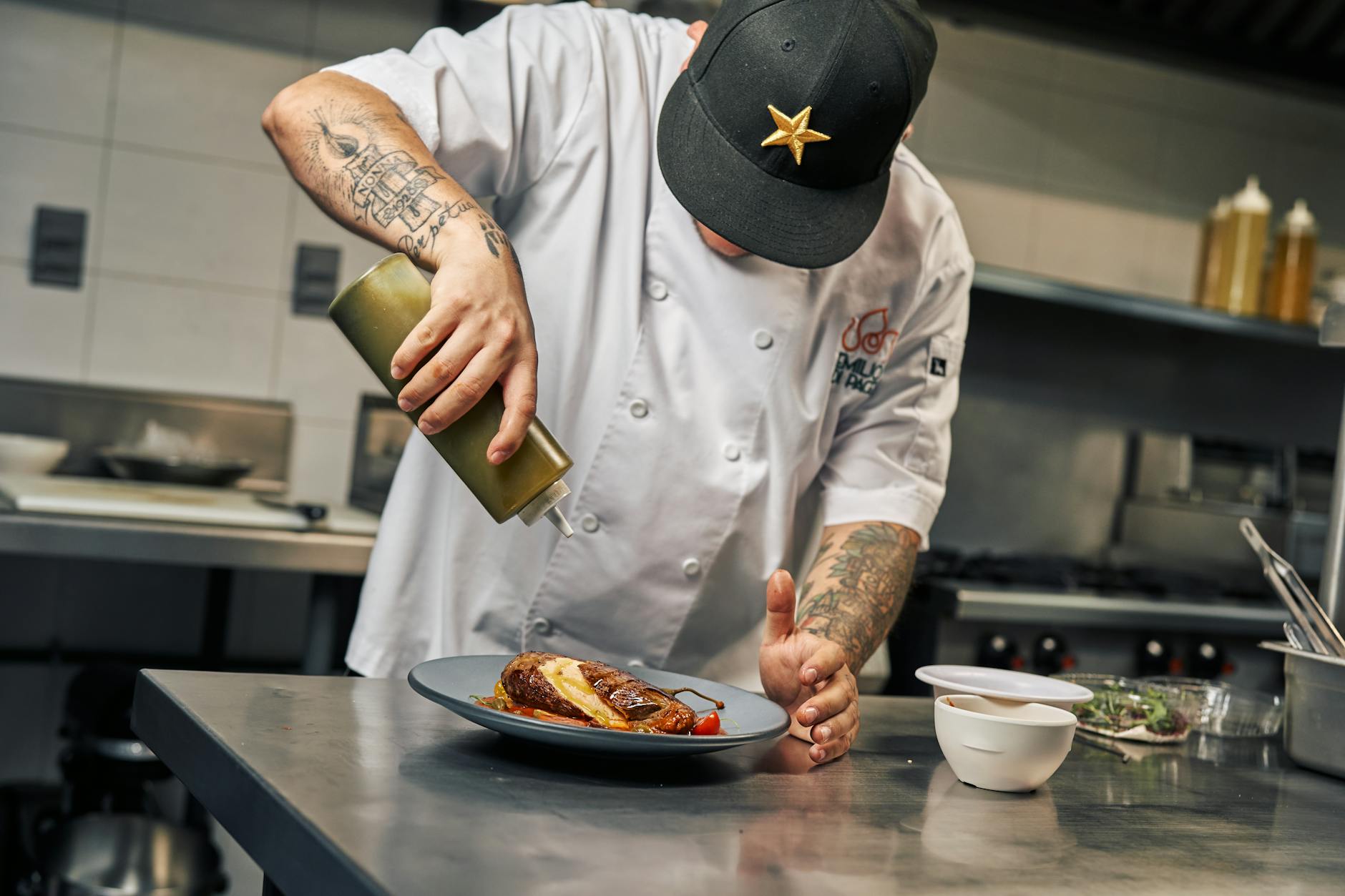
Most Canadian restaurant operators I talk to are paying DoorDash 28% and SkipTheDishes 25-30% on every delivery order. They know it's killing their margin. They also know they need an online ordering system for restaurants that lets them take direct orders, own the customer, and stop renting their business from an aggregator that decides which competitor shows up above them on the map.
The problem isn't that the tools don't exist. The problem is there are five or six serious options, they all charge differently, they integrate differently with Canadian POS systems, and the sales rep on the phone tells you what you want to hear. So this is the honest comparison. BentoBox, ChowNow, GloriaFood, Toast Online Ordering, and Square Online, sized for Canadian operators, with Canadian pricing, Canadian payment processing, and CASL on the email side.
This is a subpage in our complete guide to restaurant marketing in Canada. If you want the broader context on why commissions are eating your margin and how the five revenue channels fit together, start there. This article is narrower. It's about picking the actual software.
What an Online Ordering System Actually Does (And Where It Fits in Your Stack)
Quick definition, because the vendors muddy this on purpose.
An online ordering system is the checkout on your own website or app. Customer picks items, pays you directly, order prints in your kitchen. You keep everything except the payment processing fee (roughly 1.5-1.8% interchange on Visa/Mastercard in Canada, which is higher than the US rate of about 1.3% the American case studies quote you) plus whatever the platform charges.
Compare that to DoorDash, SkipTheDishes, and Uber Eats. Those are marketplaces. The customer finds you on their app, orders through their app, and the platform keeps 25-30% commission on delivery and 6-15% on pickup. You also don't get the customer's email. You got the order. They got the customer.
Here's the thing. Most Canadian operators need both. You're not killing the aggregators tomorrow. But if you can shift 30-40% of your current third-party volume to direct ordering, the margin math changes dramatically. I'll show you the math in the next section.
Your online ordering system sits between your POS and your website. Ideally it's one of two things:
- A feature inside your POS (Toast, Square, Lightspeed all offer this)
- A standalone tool that integrates into your POS via API (BentoBox, ChowNow, GloriaFood)
Either way, the menu should live in ONE place and push everywhere else. If you're still updating prices in five portals, that's a menu integration problem, and I wrote about that separately in the POS-to-DoorDash-to-Skip-to-Uber menu sync guide.
The Commission Math: Why Direct Ordering Is Worth the Switching Cost
Let me work through the math the way I'd do it on a sales call.
Say you're doing $48,000/month in DoorDash sales. That's the real number from a pizzeria owner in Saskatoon I was talking to recently. DoorDash keeps roughly 28% on delivery, so they kept about $14,000 of his gross. He cleared $34,000.
Now say you shift 35% of that volume to direct online ordering through your own website. That's $16,800 in monthly direct orders. On a direct order, you're paying:
- Payment processing: 1.8% (Canadian Visa/Mastercard interchange, round number)
- Online ordering platform fee: somewhere between 0% and 3.5% depending on which tool
- Delivery (if you offer it through a dispatch service like DoorDash Drive, Uber Direct, or a local courier): roughly $6-9 per order or 10-15% of order value
If you run pickup-only direct orders, your take rate on that $16,800 is about 94-97%. That's $15,800 in your pocket versus $12,100 if those same orders went through DoorDash at 28%.
Difference: about $3,700/month. $44,400/year. That covers a full-time marketing budget or a kitchen wage.
If you offer delivery through a dispatch service instead of DoorDash's marketplace, your take drops to about 80-85%. Still better than 72%. You're looking at $13,400-$14,300 net on that $16,800 in direct-order volume, versus $12,100 on the aggregator. Smaller gap, but you own the customer.
That's the prize. Now let's talk about which tool gets you there.
Head-to-Head: The Five Online Ordering Platforms Canadian Operators Actually Consider
I'll compare the five on price, what you get, POS integration, CASL posture on the email side, and where they fall down.
BentoBox
BentoBox is a full website + ordering platform originally built for sit-down restaurants in New York. Strong design templates, good for fine dining and independents who care how their brand looks.
Pricing (2026, CAD equivalent): roughly CA$200-$300/month for the website + ordering bundle, plus ~2.5% per order processed through their system (on top of payment processing). Contracts typically 12 months.
POS integrations in Canada: Toast (native), Square (via API), Lightspeed (via partner). Thin on TouchBistro integration.
Where it shines: A sit-down restaurant that wants a beautiful website AND online ordering in one tool. The design templates don't look like a strip-mall takeout site, which matters if you're selling $58 entrées.
Where it falls down: If you're a pizzeria doing 1,200 orders/month, the 2.5% per-order fee adds up fast. On that $16,800 in direct volume, BentoBox's cut is $420/month on top of processing. Also, BentoBox was acquired by Fiserv in 2021, and the Canadian support experience is, in my experience, inconsistent.
CASL note: Their email tool supports express opt-in, unsubscribe headers, and identification. Compliant if you set it up right. They don't hold your hand on CASL specifically.
ChowNow
ChowNow's pitch has always been "we charge a flat monthly fee, no per-order commission." That's genuinely different.
Pricing (2026, CAD equivalent): roughly CA$200-$450/month depending on tier, plus payment processing. No per-order take from ChowNow itself.
POS integrations in Canada: Toast, Square, Clover, Revel, and a handful of others. Lightspeed is hit-or-miss, and TouchBistro integration is limited.
Where it shines: High-volume operators. If you're doing $30K+ in direct online orders a month, the flat fee pays for itself quickly vs. a percentage model. Their branded mobile app is actually decent for operators whose customers order 3+ times a month.
Where it falls down: Lower-volume independents pay more per order effectively than they would on a percentage model. The website templates aren't as strong as BentoBox. And the marketing tools (email, loyalty) are add-ons, not baked in.
CASL note: Standard CASL-compliant opt-in on their customer forms. Fine.
GloriaFood
GloriaFood is the free option, and it's legitimately free for the ordering widget itself. They make money on payment processing and optional paid add-ons.
Pricing (2026, CAD equivalent): $0/month for basic online ordering + table reservations. Add-ons like their own branded app, custom domain, and advanced promotions run CA$20-$90/month each.
POS integrations in Canada: Limited. GloriaFood is not a POS-integrated tool for most Canadian systems. Orders come through as emails or their dashboard, and you manually enter them into the POS or print tickets. That's a deal-breaker for busy operators but fine for a food truck or small café.
Where it shines: A café doing 40 online orders a week, or a food truck that just needs a "order ahead for pickup" button. Start free, see if direct ordering works for you before committing to a paid tool.
Where it falls down: No real POS integration means double-entry at volume. No sophisticated marketing. If your operation is bigger than "owner runs the show and checks the tablet," this breaks.
CASL note: Basic opt-in is supported. Email marketing tools are limited; you'd run actual email campaigns through a separate tool like Mailchimp or Klaviyo.
Toast Online Ordering
Toast is a POS first, online ordering second. If you're already on Toast, their online ordering is usually the obvious pick.
Pricing (2026, CAD equivalent): Toast POS is roughly CA$99-$300/location/month depending on hardware and tier. Online Ordering is either included in mid/upper tiers or ~CA$75/month as an add-on. Their payment processing is their own (Toast Payments) at approximately 2.49% + $0.15 per card-present transaction in Canada, higher on card-not-present.
POS integrations in Canada: It IS the POS. Menu lives in one place and pushes to the website, DoorDash, and Uber Eats through Toast's own integrations.
Where it shines: Multi-location operators (2-8 sites) who want one system for POS, online ordering, and menu sync. The single-source-of-truth menu is the killer feature. You change a price once, it propagates.
Where it falls down: You're locked into Toast Payments, which isn't the cheapest processor in Canada. Toast's Canadian support has improved since 2022 but still lags the US experience. And if you ever leave Toast, you're rebuilding everything.
CASL note: Toast's marketing tools (email, loyalty) are CASL-aware. Express opt-in required, unsubscribe baked in. For a fuller breakdown of which POS fits Canadian operators, see our POS comparison guide.
Square Online
Square Online is the cheapest "real" option for small independents and cafés already on Square POS.
Pricing (2026, CAD equivalent): Square Online's basic online ordering is free. Paid plans (CA$35-$95/month) add features like custom domains, removing Square branding, and item modifiers. Payment processing is 2.65% + $0.10 on card-present, 2.9% + $0.30 on card-not-present in Canada.
POS integrations in Canada: Square Online IS Square. Same menu, same inventory, same customer database.
Where it shines: Cafés, bakeries, food trucks, and small single-location independents doing under $40K/month online. The free tier is genuinely usable. And the setup is fast: most operators can have a functioning online ordering page live in a weekend.
Where it falls down: Square's kitchen workflow isn't as strong as Toast's for volume pizza or sit-down restaurants. The website design is fine but not memorable. And Square Canada has historically been slower to roll out features than Square US; check feature parity before signing up.
CASL note: Square's marketing tool (Square Marketing) handles opt-in and unsubscribe properly. One of the simpler CASL-compliant setups if you're already in the Square product stack.

Decision Framework: Which One Fits Your Operation
Here's how I'd pick, based on the kind of restaurant you're running.
If you're a single-location café, food truck, or coffee shop doing under CA$20K/month online: Start with Square Online (if you're on Square POS) or GloriaFood free tier. Don't spend on a premium tool until you've proven the channel works.
If you're an independent sit-down restaurant that cares about brand: BentoBox if you want the prettiest website, ChowNow if you want lower per-order cost at volume. Both integrate with Toast and Square.
If you're a pizzeria or fast-casual doing CA$30K+ in direct online orders: ChowNow (flat fee beats per-order math) OR Toast Online Ordering (if you want everything in one platform). Run the actual math on your volume before picking.
If you have 2-8 locations: Toast. The menu-sync-across-locations is worth the switching cost if you're not already there. It kills the problem I heard from a Winnipeg operator: "I changed the price of one pizza by a dollar. It took me 35 minutes." One change, one place, every channel updated.
If you're in Quebec: Test the French-language handling in detail before signing anything. OQLF enforces Bill 96 with fines up to $30,000 for non-compliant public-facing materials. Most of these tools handle French menu translation inconsistently. Toast and Square have the better French-language support among the five; BentoBox and ChowNow are weaker on this. Get a demo with your actual French menu loaded, not the vendor's canned French demo.
The 30-Day Implementation: What Switching Actually Looks Like
This is the piece most sales reps skip. Here's what the work looks like, week by week, if you're switching from "taking orders by phone + relying on DoorDash" to a real direct-ordering setup.
Week 1: Menu audit and source-of-truth decision. Pull your menu out of every place it currently lives. Website, POS, DoorDash, Skip, Uber. Compare them. You'll find 5-15 discrepancies. Decide which system is your source of truth from here on. Usually the POS. Get one clean, accurate menu file.
Week 2: Platform setup and payment processing. Sign up for the platform you picked. Upload menu, set up categories, item modifiers, pricing. Configure payment processing. Test five orders yourself with your own credit card before going live. Canadian processing has quirks (Interac debit handling varies by platform); catch them now.
Week 3: Integration + kitchen workflow. Integrate with your POS if it's a standalone tool. Set up ticket printing or KDS display. Run a soft launch: take 10-20 orders from staff or friends. Find out if the kitchen workflow actually works during a Friday rush, not a Tuesday 2pm test.
Week 4: Marketing push + customer migration. Email your existing customer list (the one you've been building, CASL-compliant, with express opt-in). Put QR codes on tables with "skip the phone, order online + 10% off first direct order." Add a "order direct" button to your Google Business Profile and your local SEO listings. Quietly signal to your DoorDash regulars that direct ordering exists without burning that channel yet.
Month 2-3: Measure the shift. Track what percentage of your total online orders are now direct vs. aggregator. Aim for 25-35% direct within 90 days, 40-50% within six months. That ratio is the number that tells you if this worked.
Most operators I've watched go through this see 15-20% direct in the first 60 days and plateau unless they keep actively marketing the direct channel. Which means the ordering system alone doesn't solve the problem. You need the tool PLUS consistent prompts via email, SMS (CASL-compliant, opt-in only), and reputation signals pointing people to your direct channel.
Red Flags to Watch For on Every Sales Call
I've sat in on too many of these calls. Here's what to push back on.
"We'll migrate your menu for free." Great. Ask them in writing: who owns the menu file after migration? Is it exported-able? If you leave, can you take a clean CSV with you? If the answer is murky, they're betting on lock-in.
Long contracts with auto-renewal. 12-month contracts are standard. 24-36 month contracts for online ordering tools are not standard and you should walk. Month-to-month is ideal for your first six months; you need the freedom to switch if the tool doesn't work.
Vague pricing on payment processing. "Competitive rates" is not a number. Get the actual percentage + per-transaction fee for Canadian Visa/Mastercard card-present, card-not-present, and Interac debit in writing. Do the math against your current processor.
"We're CASL-compliant." Cool. Show me. Where's the express opt-in checkbox? Where's the unsubscribe in the email footer? Who's on the hook if CRTC fines us , you or your vendor? Spoiler: it's you. You're the sender. The vendor is infrastructure. If they can't walk you through the compliance model, they don't know it.
No Canadian reference customers. "We work with thousands of restaurants" means nothing if 99% are in Texas. Ask for three Canadian reference operators in your segment (independent, fast-casual, pizzeria, café) and actually call them. A US-built tool with weak Canadian support is a real risk.
The integration is "coming soon." If they tell you the POS integration you need is launching in Q2, assume it's launching in Q4 of next year. Don't buy on a roadmap promise.
What to Do Next
If you're still on DoorDash-and-prayer and want to start somewhere, here's the shortlist:
- On Square POS → test Square Online for free for 30 days.
- On Toast POS → turn on Toast Online Ordering and add a QR code to tables this week.
- On Lightspeed, Clover, or TouchBistro → evaluate ChowNow (flat fee) vs. BentoBox (brand-heavy) based on volume.
- Not on a modern POS yet → fix that first. The online ordering system is downstream of the POS decision. Read the POS comparison for Canadian restaurants before picking the ordering tool.
Either way, the point isn't the software. The point is building a direct channel so that next month, when DoorDash raises its commission from 28% to 30% (they will, eventually), you have use. You own a growing list of customers who order from you directly. The aggregator becomes a marketing channel, not a landlord.
That's the whole game.
Related Reading
- Cutting DoorDash + SkipTheDishes Commission: A Direct-Ordering Recovery Plan
- POS-to-DoorDash-to-Skip-to-Uber Menu Sync Guide
- Best POS for Canadian Restaurants: Toast vs Square vs Lightspeed vs TouchBistro vs Clover
- Restaurant Email + SMS Marketing Without Breaking CASL
- Restaurant Loyalty Programs: First-Party Data as a Margin Strategy