
Restaurant Marketing for Canadian Operators
Restaurant Social Media Marketing: When Instagram Stops Working, What Replaces It
By Kyle Senger
15+ years in local marketing; Google Ads certified; Shopify Partner.
TLDR
Organic Instagram reach has collapsed to under 2% for most restaurant business accounts in 2026, per Hootsuite's 2024 benchmarks, making it a credibility layer rather than a discovery or acquisition channel.
- Organic reach: a restaurant with 2,000 followers reaches roughly 20 to 60 people per post, fewer than a sign in the window.
- Paid social: Meta ad spend of CAD $300 to $500 per month, tied to a specific offer and a warm custom audience, is the minimum budget to generate usable conversion data.
- CASL compliance: email lists built from social campaigns require express consent under Canada's Anti-Spam Legislation, with fines starting at CAD $1 million per violation.
- Platform priority: Facebook and Instagram for paid campaigns, TikTok for organic video reach with a 25 to 40 demographic, Google Ads for highest-intent direct orders.
- Real goal: move people from social into a direct ordering page or owned email list, not a third-party platform taking commission.
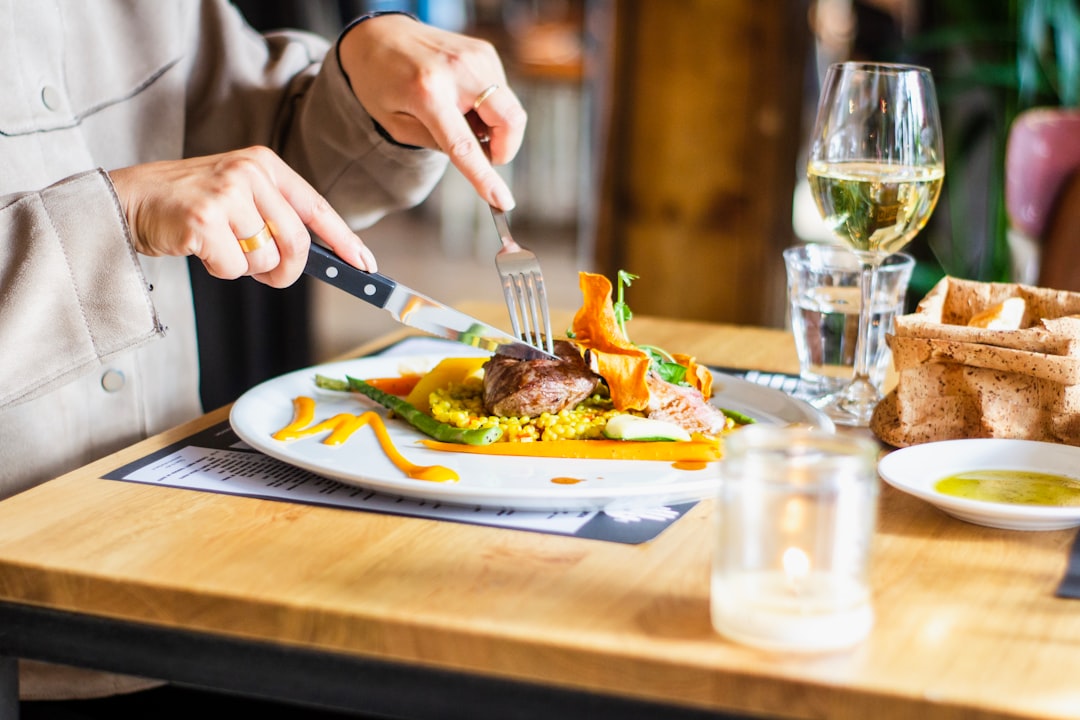
Here's a scenario a lot of restaurant owners are living right now. You've been posting on Instagram for three years. Good photos, decent captions, a few reels. Your follower count crept up slowly. But when you look at your actual bookings, your actual delivery orders, your actual revenue, you can't point to a single dollar that came from it.
That's not a content problem. That's a strategy problem.
Restaurant social media marketing in 2026 is not what it was in 2019. Organic reach on Instagram has collapsed to under 2% for most business accounts. You're essentially posting into a void unless you're paying to boost, and even then, the attribution is murky. The operators who are winning on social right now aren't the ones with the prettiest feeds. They're the ones who figured out what social is actually for, and stopped expecting it to do things it can't do anymore.
This article is specifically about social media as a channel: what it's good for, what it's not, and what to do when Instagram stops pulling its weight. For the broader picture of how social fits into your full marketing mix, including SEO, Google Ads, reputation, and loyalty, see our complete guide to restaurant marketing in Canada.
Why Organic Instagram Reach Died and What That Actually Means for Your Restaurant
Instagram's algorithm in 2026 prioritizes content from personal accounts, Reels with high watch time, and posts that generate saves and shares. A photo of your daily special from a business account? It's reaching maybe 1-3% of your followers, per industry-wide engagement tracking from Hootsuite's 2024 restaurant benchmarks.
That means if you have 2,000 followers (which is respectable for an independent restaurant), roughly 20-60 people are seeing any given post. Organically.
Think about that math. You're spending 30-45 minutes a week on content creation, photography, caption writing, hashtag research. And you're reaching fewer people than a sign in your window.
I think the honest thing to say here is: Instagram isn't dead. But its job has changed. It's no longer a reach channel for most independent restaurants. It's a credibility channel.
When someone hears about your restaurant from a friend, reads a Google review, or sees a paid ad, the next thing they do is check your Instagram. They're not looking for a sale. They're looking for evidence that you're real, that you're active, that the food looks good. That's what your feed is for now. It's a proof layer, not a discovery layer.
That's a very different content brief. And it means you should probably spend a lot less time on it than you currently are.
The Channel That Actually Drives Covers: Paid Social Done Right
If organic reach is dead, paid social is very much alive. But most restaurant operators are running it wrong.
Here's what I typically see: an operator boosts a post for $20, targets "people near me who like food," gets 400 impressions and 12 clicks, and concludes that Facebook ads don't work. That's not a fair test. That's a random experiment with no offer, no audience segmentation, and no way to measure whether anyone actually walked in.
Paid social for restaurants works when you treat it like a direct-response channel, not a branding exercise.
What that looks like in practice:
Start with a specific offer tied to a specific action. Not "come visit us." Something like: "Book a table for two this weekend and we'll include a complimentary starter. Reserve at [link]." That's an offer. It's trackable. You can measure how many people clicked, how many reserved, and what the table was worth.
Run it to a warm audience first. On Meta (Facebook + Instagram), you can upload your customer email list and create a custom audience. You can also create a lookalike audience from that list, meaning Meta finds people who look like your existing customers. That's a much better use of $300 in ad spend than "people who like food in a 10-kilometre radius."
Budget-wise, most independent restaurants I've worked with see reasonable results starting at $300-500/month CAD in Meta ad spend. That's not a magic number, and it's not enough to run a full campaign across multiple objectives. But it's enough to test one offer, one audience, one creative, and see whether the channel is working before you commit more.
The goal isn't followers. The goal is reservations, direct orders, and dine-in covers. Keep that in mind every time you're building a campaign.
What a Real 90-Day Social Media Setup Looks Like
This is where most articles get vague. So let me be specific about what the actual work looks like, week by week.
Month 1, Week 1-2: Audit and baseline. Pull your last 90 days of Instagram and Facebook data. What's your average reach per post? Average engagement rate? Have you ever run a paid campaign? If yes, what was the click-through rate and did you track any conversions? You need a real baseline before you can know if anything is improving. Also check your Meta Business Suite to confirm your pixel is installed on your website. If it's not, nothing you do in paid social will be properly trackable.
Month 1, Week 3-4: Build your first warm audience. Export your customer email list from your POS or online ordering platform. Upload it to Meta as a custom audience. If you have fewer than 1,000 emails, that list may be too small to match effectively, but do it anyway and build from there. Set up a lookalike audience at 1% similarity. This becomes the foundation of every paid campaign you run.
Month 2, Week 1-2: Launch your first direct-response campaign. Pick one specific offer. One clear call to action. One landing page (your reservation system or your direct online ordering page, not your homepage). Set a $10-15/day budget. Run it for 14 days without touching it. You need enough data to actually read the results.
Month 2, Week 3-4: Read the results honestly. What was your cost per click? If you're paying more than $3-5 CAD per click on a restaurant ad, your creative or your audience probably needs work. Did any of those clicks convert to reservations or orders? If you can't answer that question, you have a tracking problem, not a creative problem.
Month 3: Iterate, not reinvent. Change one variable at a time. Test a different photo. Test a different offer. Test a different audience. Most operators make the mistake of changing everything at once and then having no idea what actually moved the numbers.
By month three, you should have a clear answer to the question: is paid social a channel worth investing in for my restaurant? Some operators find it's their best acquisition channel. Others find Google performs better for their market. That's a legitimate outcome. The point is to find out with real data, not gut feeling.
Instagram vs. TikTok vs. Facebook: Which Platform Is Actually Worth Your Time
I get this question a lot. Here's my honest read on each.
Instagram is still the credibility layer I described earlier. Keep it active, keep it visual, don't stress about frequency. Two to three posts a week is enough to signal that you're alive and the food looks good. Reels still get better organic reach than static posts, so if you can do one short video a week, do that. But don't let perfect be the enemy of present.
TikTok is genuinely interesting for restaurants, and it's the one platform where organic reach still feels like 2015 Instagram. A well-shot video of your kitchen, your team, or a behind-the-scenes process can still reach thousands of people who've never heard of you. The catch is that it requires consistent video content, and it skews younger. If your restaurant serves a 25-40 demographic, TikTok is worth experimenting with. If you're a fine dining room where the average cover is $120, the ROI is less obvious.
Facebook is where your paid campaigns live. Organic Facebook reach for restaurant pages is even lower than Instagram, so don't spend time on it organically. But the Meta advertising platform (which covers both Facebook and Instagram) is still the most sophisticated audience-targeting tool available to small businesses. That's where your budget goes.
Google is not social media, but I'd be doing you a disservice if I didn't mention it here. For most Canadian restaurants, Google is the highest-intent channel. Someone searching "pizza near me in Regina" is ready to order. Someone scrolling Instagram is not. If you have to choose between $500/month in Meta ads and $500/month in Google Ads, the Google money usually converts better for direct orders. For a full breakdown of how Google Ads work for restaurants, see our guide to restaurant Google Ads in Canada.
The Real Problem: Social Media Won't Save You If You Don't Own the Customer
Here's the thing that most social media conversations miss entirely.
You can have 10,000 Instagram followers and still be completely dependent on DoorDash and SkipTheDishes for your delivery revenue. Social media reach and customer ownership are two different things. One is a vanity metric. The other is a margin strategy.
A fine dining owner in Toronto told me they spent $2,400 on an Instagram-only agency for six months. They got 200 followers. They got zero new tables they could attribute to it.
That's not an Instagram problem. That's a strategy problem. The agency was optimizing for followers, not for covers.
The operators who are actually building something durable are using social as the top of a funnel that ends in a customer they own. Social ad drives someone to a direct online ordering page. That order captures an email and a phone number. That email goes into a CASL-compliant list (under Canada's Anti-Spam Legislation, you need express consent and a clear unsubscribe option, or you're looking at fines that start at $1M per violation). That list gets a loyalty offer next month. That's a customer relationship you own. DoorDash can't take a commission on it.
For a full breakdown of how to build that email and SMS list properly without running into CASL issues, see our guide to restaurant email and SMS marketing. And for the direct ordering piece, which is where the margin actually lives, see our online ordering comparison for Canadian restaurants.
The social media piece is real. But it's the beginning of a system, not the whole system.
Reviews, Reputation, and Why Social Proof Lives on Google, Not Instagram
One thing I want to flag because it comes up constantly: a lot of operators conflate social media engagement with online reputation. They're not the same thing.
Your Instagram likes don't affect your Google ranking. Your Google reviews do. And in 2026, per BrightLocal's 2024 Local Consumer Review Survey, 87% of consumers read online reviews before visiting a local business. For restaurants, that number is even higher.
The fast-casual owner in Calgary who got a 1-star Google review because an Uber Eats driver dropped food in the snow? That review is still sitting on their Google Business Profile. It's affecting Friday-night reservations. And no amount of Instagram content fixes it.
Reputation management is its own discipline, and it connects directly to your local SEO performance. We cover both in depth at our restaurant reputation management guide and our restaurant local SEO guide. If your Google rating is below 4.3, that's the fire to put out before you spend another dollar on social.
Three Takeaways Before You Change Anything
If you're an independent operator trying to figure out where social media actually fits in your marketing, here's where I'd leave you.
One. Instagram is a credibility channel now, not a discovery channel. Keep it alive and visually honest. Stop expecting it to fill tables on its own.
Two. Paid social works when it's tied to a specific offer, a trackable link, and a warm audience. $300-500/month CAD in Meta ad spend is a reasonable test budget. Anything less and you won't have enough data to learn from.
Here's the math on what that test budget actually tells you. Say you spend CA$400/month on Instagram + Facebook ads promoting a CA$49 prix fixe dinner for two. At a CA$1.50-$2.00 CPM and a 1.2% click-through rate, you're getting roughly 2,400-3,200 link clicks per month. If 3% of those clicks convert to a reservation, that's 72-96 reservations. At CA$49/cover pair, that's CA$3,528-$4,704 in attributed revenue against CA$400 in ad spend. Your ROAS is 8.8-11.8x. That's the honest upside of paid social for restaurants when the offer is strong and the tracking is in place.
Three. Social media that doesn't end in a customer you own is just renting attention. The goal is to move people from Instagram to your direct ordering page, your reservation system, or your email list. That's where the margin lives.
For the full picture of how social connects to SEO, Google Ads, loyalty, and the commission recovery strategy, start with our restaurant marketing Canada playbook. It's the hub that ties all of this together.
Related Reading
- Restaurant Google Ads in Canada: What Actually Drives Bookings
- Restaurant Email + SMS Marketing Without Breaking CASL
- Restaurant Reputation Management in Canada: Reviews, Responses + Recovery Playbook
- Restaurant Local SEO + Google Business Profile for Canadian Operators
- Cutting DoorDash + SkipTheDishes Commission: A Direct-Ordering Recovery Plan