
Restaurant Marketing for Canadian Operators
Restaurant SEO: A Field Guide for Canadian Independents
By Kyle Senger
15+ years in local marketing; Google Ads certified; Shopify Partner.
TLDR
Restaurant SEO for Canadian independents splits into three problems: local pack visibility, organic website rankings, and third-party listing control, and ignoring any one costs you full-margin orders to platforms charging 25 to 30% commission.
- Core issue: DoorDash and SkipTheDishes listings rank above most restaurant websites for branded searches, routing customers through a middleman instead of your own ordering page.
- Website basics: an HTML menu, a location page with neighbourhood context, mobile load time under 2.5 seconds per Google PageSpeed Insights, and a title tag naming your food type and city are the four non-negotiable fixes.
- Cost comparison: per DataForSEO, paid search clicks for restaurant terms average CAD $22.07 each, making organic SEO cheaper per lead by month 12 for most single-location operators.
- Quebec layer: Bill 96 requires French-predominant digital content, with OQLF fines up to CAD $30,000 for first offences.
- Budget range: CAD $500 to $1,500 per month from a Canadian agency for a single location, varying by market competitiveness.
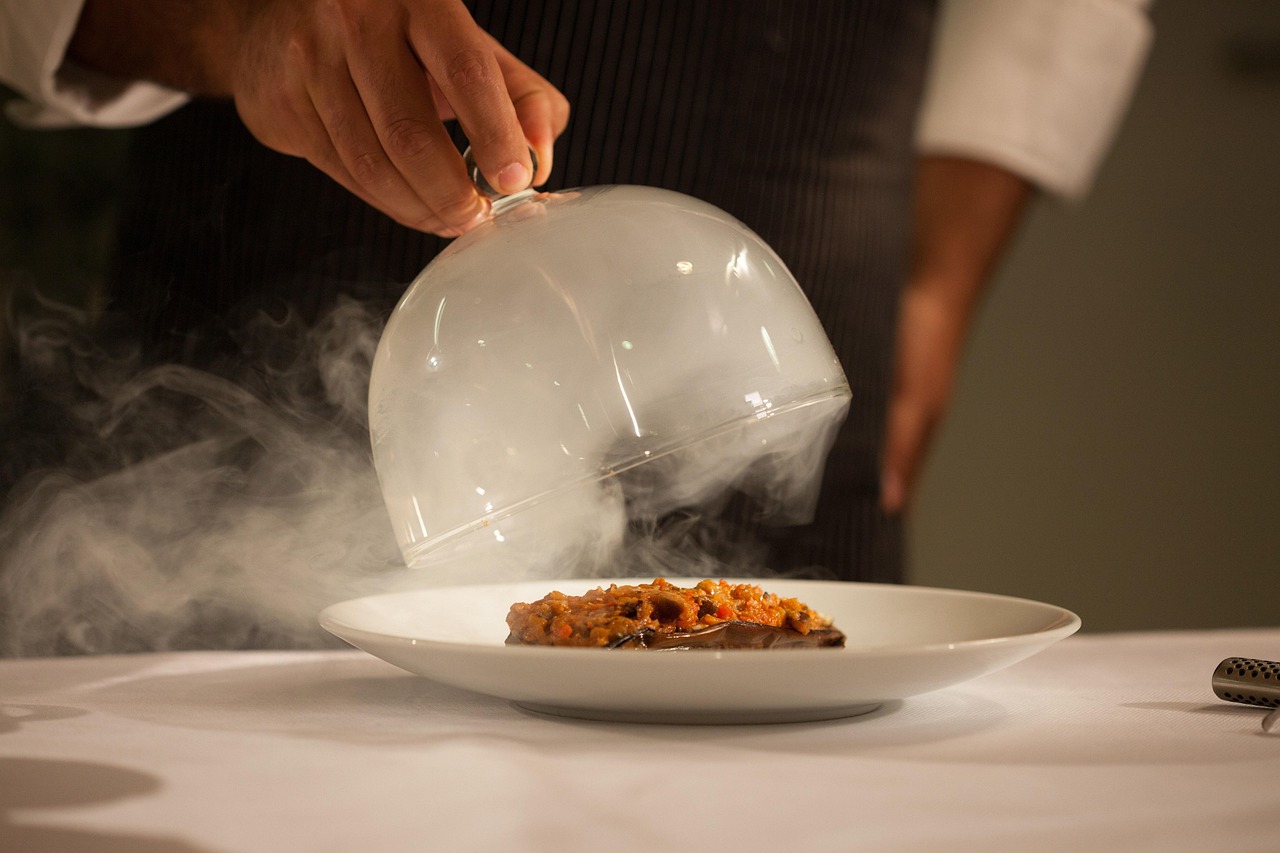
Picture this: someone in your city types "best pizza near me" into Google at 6:47 on a Friday night. They're hungry, they have their wallet out, and they're going to order from whoever shows up first.
Is that you?
Restaurant SEO is the work that determines whether your name appears in that moment or your competitor's does. It's not complicated in theory. It's just specific, and most restaurant owners either don't know where to start or got burned by an agency that sent monthly reports full of rankings nobody cared about.
This guide is for Canadian independent operators who want to understand how search actually works for restaurants, what to do first, and how to stop paying for things that don't bring people through the door. For the broader picture of channels, commission math, and how SEO fits into a full marketing setup, see our complete guide to restaurant marketing in Canada.
What "Restaurant SEO" Actually Means (And What It Doesn't)
SEO stands for search engine optimisation. In plain English: it's the work you do so Google shows your restaurant when someone nearby searches for what you serve.
Here's the thing though. Restaurant SEO isn't one thing. It's three distinct problems that get lumped together.
Problem 1: Local pack visibility. This is the map result. The three restaurants that show up with stars, hours, and a phone number before any website links. Winning here is mostly about your Google Business Profile and your reviews. This is what most people mean when they say "restaurant local SEO," and I've written a full breakdown of how to own your Google Business Profile and local pack ranking if you want to go deep on that piece.
Problem 2: Organic website rankings. These are the blue links below the map. Someone searches "best Italian restaurant Saskatoon" and your website shows up. This is where your site's content, speed, and structure matter.
Problem 3: Third-party listing management. Your Yelp, TripAdvisor, Zomato, and delivery platform pages all rank in Google too. When someone searches your restaurant name and the first result is your DoorDash listing instead of your website, that's a problem. DoorDash collects the click. DoorDash owns the relationship.
Most of the "restaurant SEO tips" you'll find online focus only on Problem 1. This guide covers all three, because you can't win with just one.
Why Your Website Is the Most Neglected Asset You Own
I've looked at a lot of independent restaurant websites. Most of them have the same issues. The menu is a PDF that Google can't read. The homepage loads in 9 seconds on a phone. The address is buried in the footer in 10-point font. There's no page that says "pizza delivery Regina" or "brunch Saskatoon" anywhere.
Google needs to read your site to understand what you are and where you are. If your menu is a scanned image or a PDF, Google sees nothing. If your address only appears once in a footer, Google isn't confident about your location. If your site takes 8 seconds to load on mobile, Google demotes it. Simple as that.
Here's what a restaurant website actually needs to rank:
An HTML menu, not a PDF. Put your menu in actual text on a webpage. Every dish name is a keyword. "Wood-fired Neapolitan pizza" on a real webpage beats a PDF every time. You can still have a downloadable PDF version. But the HTML version is what Google reads.
A location page that says what you are and where you are. Not just your address. A paragraph that says something like: "We're a family-run Ethiopian restaurant in the Riversdale neighbourhood of Saskatoon, serving traditional injera and tibs since 2018." That's content Google can work with.
Mobile speed. Per Google's own PageSpeed Insights benchmarks, a page loading in under 2.5 seconds is considered "good." Most restaurant sites I audit are at 6-10 seconds on mobile. You can test yours free at pagespeed.web.dev. If you're over 4 seconds, fixing that one thing will move your rankings.
A title tag that includes your food type and city. The title tag is what shows up as the blue link in Google. "Home | Mamma Rosa's" tells Google almost nothing. "Authentic Neapolitan Pizza in Regina, SK | Mamma Rosa's" tells Google exactly what you are and where you are.
The Math on Why SEO Beats Paid Ads for Most Independent Restaurants
I want to be honest here: Google Ads can work well for restaurants. For a full breakdown of when to run paid search and what it actually costs, see our guide to restaurant Google Ads in Canada. But for most independents on a tight budget, SEO is the better long-term investment. Here's why.
Per DataForSEO data for Canada, the average cost-per-click for "restaurant SEO" as a keyword is CA$22.07. That's what you'd pay every time someone clicks your ad for that term. If 100 people click your ad in a month, that's $2,207 gone. When the ad budget stops, the clicks stop.
SEO works differently. You invest time and money upfront, and the rankings stay. Typically, the first three to four months are building work with little visible return. Months five through eight is where you start seeing consistent traffic. By month 12, a well-executed SEO campaign for an independent restaurant usually costs less per lead than paid ads, because you're not paying per click.
Here's a simple illustration. Assume your average dine-in cover is worth $55 in revenue and you convert 1 in 5 website visits into a reservation or walk-in. If SEO brings you 200 organic visits a month, that's roughly 40 covers, or $2,200 in revenue from a channel that costs you maybe $500-$800/month in agency work. Compare that to paying $22/click for the same 200 visits ($4,400 in ad spend). The numbers are illustrative, but the direction is real.
The caveat: SEO takes longer. If you need customers next week, run ads. If you're building something that lasts, invest in search.
What Months 1 Through 4 Actually Look Like
This is where I think most operators get misled. An agency tells you "SEO takes 3-6 months" and then goes quiet. You don't know what they're doing or whether it's working. So here's what the work actually looks like, week by week.
Month 1, Week 1-2: Technical audit and fixes. The first thing worth doing is a technical audit. This means crawling your site with a tool like Screaming Frog or Semrush to find broken pages, missing title tags, slow load times, and pages Google can't index. For a typical independent restaurant site (10-20 pages), this takes 2-3 hours. Then you fix the issues. Slow images get compressed. Missing title tags get written. The PDF menu gets converted to HTML.
Month 1, Week 3-4: Google Business Profile and citation cleanup. Your GBP (Google Business Profile) needs to match your website exactly. Same business name, same address format, same phone number. This is called NAP consistency (Name, Address, Phone). If your website says "123 Main St" and your GBP says "123 Main Street," that inconsistency weakens your local ranking signal. Check your listings on Yelp, TripAdvisor, and any food directories. Fix the ones that are wrong.
Month 2: Content foundation. This is where you build the pages Google needs to understand your restaurant. A proper location page. An updated menu page in HTML. If you have multiple locations, each one gets its own page. If you serve a specific neighbourhood or community, that goes on the page too. "Late-night ramen in Kensington, Calgary" is a phrase someone searches. If you have a page that says it, you can rank for it.
Month 3: Review velocity and link building. Reviews aren't just for reputation. They're a ranking signal. Per the BrightLocal Local Consumer Review Survey, businesses with more recent reviews rank higher in local search than businesses with older reviews, even if the older ones have a higher average rating. So you need a system for asking happy customers to leave Google reviews. Not a QR code on the table nobody scans. An actual process: server mentions it, receipt mentions it, follow-up SMS mentions it. For how to build that SMS flow without violating CASL, see our guide to restaurant email and SMS marketing.
Month 4: Measuring what moved. By month four, you should be able to see real movement in Google Search Console (it's free). Look at impressions (how often your site appeared in search results) and clicks (how often someone clicked). If impressions are growing, your content is being indexed. If clicks are growing, your titles and descriptions are working. If neither is moving, something is broken and needs a different approach.
The Third-Party Listing Problem Nobody Talks About
Here's something I think gets overlooked in most restaurant SEO guides.
Your DoorDash listing, your SkipTheDishes page, and your Uber Eats menu all rank in Google. When someone searches your restaurant name, those pages often outrank your own website. That's a problem for two reasons.
First, it sends the customer to a platform that charges you 25-30% commission on every order. The customer found you through your brand, but the transaction goes through a middleman who takes $14 out of every $48 you make. (That's not a made-up number, by the way. That's what operators are reporting.)
Second, those listings often have wrong information. Wrong photos. Wrong prices. Items that are 86'd still showing as available. One operator in Winnipeg told me he changed the price of a pizza by a dollar and it took 35 minutes across five systems, and he still missed one. Three weeks of orders went out at the wrong price on Uber Eats. For a full breakdown of how to get your menu in sync across your POS, DoorDash, Skip, and Uber, see our menu integration guide.
The SEO fix here is two things. First, make sure your own website ranks for your restaurant name. That means your site needs to be faster, better-structured, and have more content than your DoorDash page. Second, make sure your Google Business Profile links to your direct ordering page, not to a third-party platform. Every order that goes through your own site instead of DoorDash is a full-margin order you own.
The Review Problem Is an SEO Problem
I want to say this clearly because most people treat reviews as a reputation issue and miss the SEO angle entirely.
Reviews are a direct ranking factor in Google's local algorithm. More reviews, more recent reviews, and higher ratings all correlate with higher local pack rankings. Per Google's own published guidance on how local search works, "prominence" (which includes review count and rating) is one of the three core factors in local ranking alongside relevance and distance.
In my experience, restaurants that actively ask for reviews and respond to every one of them, good or bad, tend to rank meaningfully higher within 90 days than restaurants that let reviews accumulate passively. That's not a guarantee, but the pattern is consistent.
One bad review on Google can affect Friday reservations. One competitor reporting your Google Business Profile can get it suspended for six to eight weeks. These aren't just reputation problems. They're revenue problems with an SEO dimension. For how to respond to reviews, recover from a suspension, and build a review system that actually works, see our reputation management playbook for Canadian restaurants.
A Note for Quebec Operators
If you're running a restaurant in Quebec, your SEO work has an extra layer.
Under Bill 96 (the Charter of the French Language, as amended), your website and any digital marketing targeting Quebec consumers must be French-predominant. That means your title tags, meta descriptions, and page content need to be in French, or French needs to appear more prominently than English. The OQLF (Office québécois de la langue française) enforces this, with fines up to $30,000 for first offences.
Most SEO tools don't handle French keyword research well for Canadian French specifically. Québécois search terms differ from France French. "Pizza livraison Montréal" behaves differently than "pizza delivery Montreal" in terms of search volume and competition. If you're doing bilingual SEO in Quebec, you need someone who understands both the language law and the search behaviour. It's a real gap in the market that most agencies don't fill well.
When to DIY and When to Hire Someone
Here's my honest take.
You can DIY:
- Claiming and optimising your Google Business Profile
- Converting your menu from PDF to HTML
- Running PageSpeed Insights and compressing images
- Setting up Google Search Console and reading the basics
That work takes maybe 6-8 hours total and costs nothing except your time. It will move your rankings if your site is currently a mess.
You probably need help with:
- Technical site audits if your site has 50+ pages or a custom CMS
- Building location-specific content at scale (especially if you have 2-8 locations)
- Link building (getting other websites to link to yours, which is a ranking signal)
- Managing review velocity and GBP across multiple locations
- Bilingual SEO if you're in Quebec
The honest budget range for restaurant SEO from an agency in Canada is $500-$1,500/month for a single location, depending on how competitive your market is. Toronto and Vancouver are harder markets than Saskatoon or Regina. If someone quotes you $150/month, they're not doing real work. If someone quotes you $4,000/month for a single-location café, they're overselling.
If you want to understand what a full marketing setup looks like across all channels, not just SEO, the restaurant marketing Canada guide walks through the month-by-month build in detail.
Three Things to Take Away
Restaurant SEO comes down to three things.
Your website needs to be readable. HTML menu, fast load time, clear location content, title tags that say what you are and where you are. If Google can't read your site, you don't rank.
Your Google Business Profile is the most important single asset. Reviews, photos, accurate hours, and a direct ordering link. More on the mechanics of this in our local SEO guide.
Third-party listings are an SEO problem, not just a commission problem. When DoorDash outranks your own website for your restaurant name, you're paying a platform to capture customers who were already looking for you.
Fix those three things and you'll be ahead of most independent restaurants in your city. That's not hype. It's just where the bar actually is right now.
Related Reading
- Restaurant Local SEO + Google Business Profile for Canadian Operators
- Restaurant Reputation Management in Canada: Reviews, Responses + Recovery Playbook
- Restaurant Google Ads in Canada: What Actually Drives Bookings
- POS-to-DoorDash-to-SkipTheDishes-to-Uber Eats Menu Sync: A Source-of-Truth Guide
- Restaurant Marketing in Canada: The Full Playbook for Independent Operators