
Healthcare Marketing for Canadian Clinics
Will ChatGPT Replace Doctors? What to Actually Tell Your Patients
By Kyle Senger
15+ years in local marketing; Google Ads certified; Shopify Partner.
TLDR
ChatGPT will not replace Canadian physicians, but it has replaced the late-night Google search, and practices that ignore this shift are losing the first patient touchpoint to a language model with no licence and no accountability under CPSO oversight.
- Why AI falls short: ChatGPT cannot examine patients, access clinical history, or be held accountable under the Regulated Health Professions Act the way a licensed Ontario physician can.
- Regulatory risk: AI-generated website content still falls under CPSO's Advertising policy, meaning the physician's licence covers every claim, regardless of who wrote it.
- Content priority: a "we treat / we don't treat" page is the highest-value page for filtering mismatched patients and appearing in AI-sourced answers.
- ROI floor: per DataForSEO, Canadian paid search for medical practices costs CAD $407 per booked patient, making organic content investment break-even at 1 to 2 new patients per month.
- Best response: tell patients ChatGPT is a research tool, not a diagnostic one, and invite them to bring AI findings to the appointment.
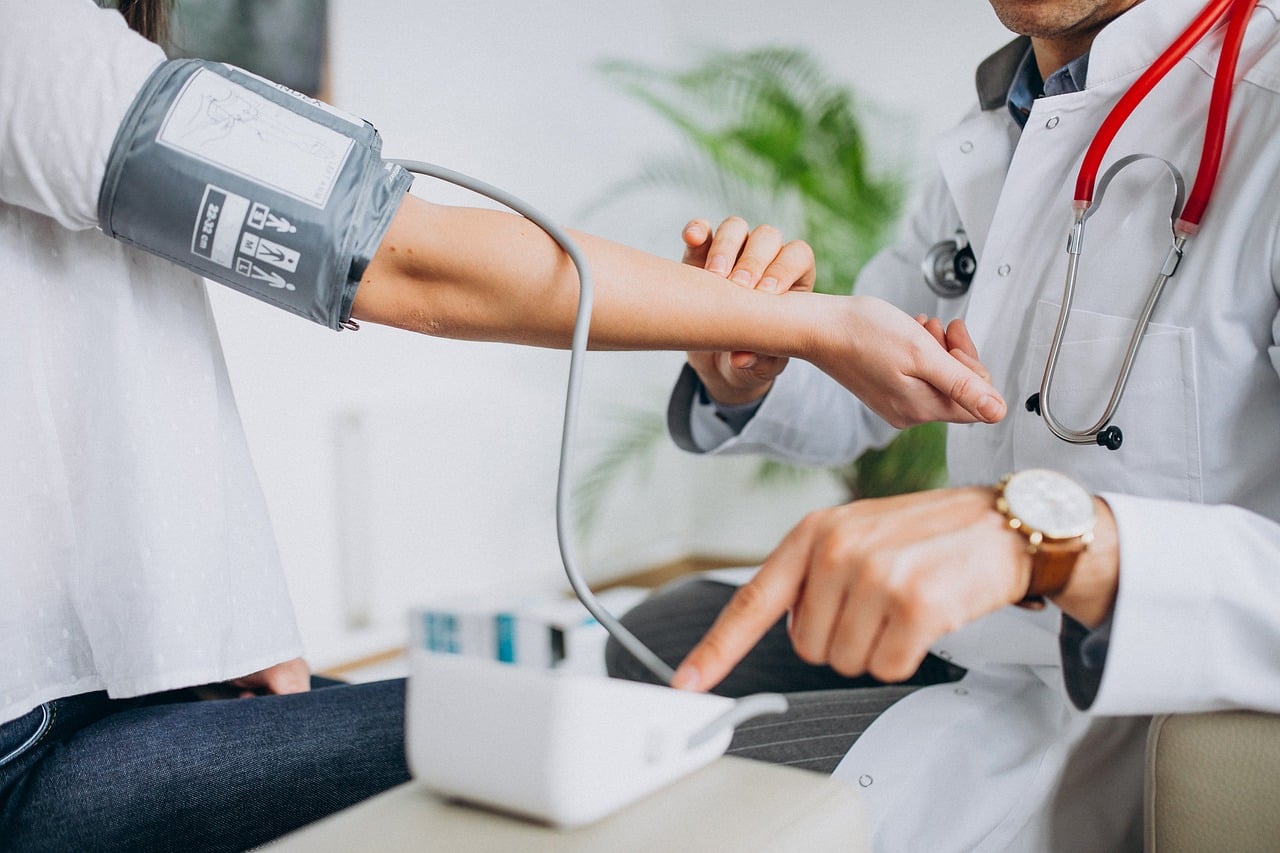
How many times this month has a patient walked in with a printout from ChatGPT, convinced they've diagnosed themselves? If you're a family doc in Canada, probably more than you'd like. And the question underneath all of it, "will ChatGPT replace doctor visits entirely?", is one your patients are already answering in their heads, whether you address it or not.
Here's the thing. The question of whether ChatGPT can replace a doctor isn't really a tech question. It's a trust question. And the way you handle it in your exam room, on your website, and in your patient communications is now part of your practice's brand, whether you signed up for that or not.
So let's talk about what's actually happening, what your patients are doing with AI right now, what the evidence says, and how Canadian practices should be positioning themselves in a world where a chatbot is the first "doctor" many people consult.
What Patients Are Actually Doing With ChatGPT Right Now
A patient types their symptoms into ChatGPT at 11pm on a Tuesday. They get back a plausible-sounding answer with a list of possible conditions. Maybe it tells them to see a doctor. Maybe it doesn't. Either way, by the time they walk into your clinic, they've already formed an opinion.
This is the new intake process, and you weren't consulted on the design.
A few patterns I see across clinics we work with:
- Patients arriving with ChatGPT-generated "differentials" and expecting you to confirm or deny them
- Patients who skip the appointment entirely because ChatGPT told them it was probably nothing
- Patients who are more anxious, not less, because ChatGPT listed 11 possibilities and they've fixated on the worst one
- Patients asking why the clinic website doesn't just answer basic questions the way ChatGPT does
That last one is the business problem. Because if your website is a static brochure and ChatGPT is an always-on answering machine, you're losing the first touchpoint with patients who are genuinely trying to figure out whether they need to see you.
Can ChatGPT Actually Replace a Doctor? The Honest Answer
No. But the reasons matter, and most patients don't understand them.
ChatGPT is a language model. It predicts plausible text based on patterns in its training data. It doesn't examine you. It doesn't take vitals. It doesn't have your history, your bloodwork from last March, or the context that you mentioned the same chest discomfort two years ago and it turned out to be reflux. It can't palpate an abdomen or listen for a murmur or notice that you look pale today compared to your last visit.
It also can't be held accountable. A physician in Ontario operates under CPSO oversight, the Regulated Health Professions Act, and their own malpractice insurance. ChatGPT's terms of service explicitly say it's not medical advice. When it's wrong, and it is wrong, frequently, on specific clinical questions, nobody's licence is on the line.
Here's what I tell practice owners when they ask me how to talk about this: don't fight the tool, fight the framing. ChatGPT isn't replacing you. It's replacing the late-night Google search patients used to do. That was never a great first step either. The difference is ChatGPT sounds more confident than Google did, which makes the misinformation problem worse, not better.
A useful analogy I've heard a Canadian GP use with her patients: "ChatGPT is like asking a well-read friend who's never met you. I'm the doctor who has."
That's the positioning. And it's the positioning your marketing should echo.
What This Means for Your Practice's Marketing
If patients are using AI as their first line of clinical research, your website and your patient-facing content need to answer three questions clearly:
- What do we actually treat, and what do we not treat?
- When should someone book an appointment versus wait it out?
- Why does seeing a real physician matter for this specific concern?
Most clinic websites I audit do none of these well. They have a "Services" page with a bulleted list. They have a "Meet the Team" page. They have contact info. That's it. There's no content that competes with ChatGPT on clarity, and there's definitely no content that shows up when ChatGPT is pulling sources to answer a patient's question.
This is where AI visibility, meaning whether your clinic's content shows up as a source when patients query AI tools, becomes part of your marketing stack. If you want a deeper breakdown of how to audit that, our team has a full piece on whether your clinic shows up when patients ask AI. For the broader picture of how search and SEO are shifting under AI, see our guide to medical SEO for Canadian practices.
The practical point is this: AI isn't replacing doctors. But it is replacing the way patients decide which doctor to see, or whether to see one at all. And that's a marketing problem with a clinical edge.
What the Canadian Regulators Say About AI Content on Your Website
This is the piece most agencies miss, and it's where practices get into trouble.
Under CPSO's Advertising policy (Ontario), any content on your website that could be construed as health advice must be accurate, factual, verifiable with evidence, and cannot include guarantees of outcomes or patient testimonials tied to specific treatments. That applies whether a human wrote it or an AI did.
So if you're tempted to use ChatGPT to generate blog content for your practice, which many agencies are doing quietly, you're still the one on the hook for every claim in it. The College doesn't care that an AI wrote it. They care that your name and licence number are associated with it.
Three specific failure modes I see:
- AI-generated content that claims a treatment "eliminates" or "cures" a condition (flagged by every provincial college I'm aware of)
- AI-generated patient FAQs that include testimonial-style language ("patients love our approach to...") which violates CPSO Policy Statement on Advertising
- AI-generated blog posts citing outdated or US-specific clinical guidelines (CDC recommendations, for example, when Canadian guidelines differ)
If you want the full breakdown of what's allowed and what isn't, our sibling piece on AI-generated patient education rules under CPSO, CPSBC, and CPSA walks through it by province. The short version: you need human review before anything AI-generated hits your public-facing pages, and you need a physician willing to put their name to it.

A Pattern Observation: Practices That Handle This Well
Across clinics we work with, the ones who navigate the ChatGPT-patient dynamic best share a few traits. None of them are technical. They're editorial.
First, they have a clear content voice on their website that sounds like the doctor, not like a marketing agency. When a patient reads the "About" page or a condition explainer, they feel like they're hearing from a real human who went to medical school. ChatGPT can't replicate that because it doesn't have a personality rooted in a specific clinical history.
Second, they address the AI question directly on their site or in their intake materials. Something like: "If you've been researching your symptoms online or with an AI tool, bring that information to your appointment. We'll work through it together." That reframes the patient's ChatGPT session from a threat to an input.
Third, they don't try to beat AI on volume. They try to beat it on trust. That means fewer blog posts but better ones, written or reviewed by the physician, grounded in Canadian clinical guidelines, and tied to what the practice actually treats.
Typically, practices that do all three see their new-patient inquiries shift over 6 to 9 months toward patients who are better informed, better matched to the practice, and less price-sensitive. The content isn't a lead magnet. It's a filter.
A Week-by-Week Plan for Positioning Your Practice Against AI
Here's what I'd do if I ran a family medicine or specialist clinic in Canada right now and I wanted to build a durable position in the ChatGPT era. This is a 90-day plan, and none of it requires fancy tech.
Month 1, Week 1-2: Audit what patients are actually asking. Sit down with your front desk and list the top 20 questions patients have called about in the last 90 days. "Do you treat X?" "Can I get a referral for Y?" "How long until I can be seen?" These are your content priorities. Don't guess, ask.
Month 1, Week 3-4: Write the "we treat / we don't treat" page. Most clinic websites fail here. You need a clear page explaining what your practice handles, what you refer out, and what you tell patients to go to the ER for. This is the single highest-value page for filtering mismatched patients and for ranking in AI responses, because it directly answers what patients query.
Month 2, Week 1-2: Build 5 condition explainers in the doctor's voice. Pick the 5 most common reasons patients book with you. Write a 400-600 word explainer for each, in plain language, covering: what it is, when to worry, when to wait, what your practice does about it. Have the physician review and approve every word. Cite Canadian guidelines (Choosing Wisely Canada, CFPC, or the relevant specialty society). These are the pages ChatGPT will pull from when patients query your conditions.
Month 2, Week 3-4: Set up your Google Business Profile properly (in YOUR name). If your agency has this in their name, fix it now. GBP is one of the top signals AI tools and search engines use. It should show current hours, accepting-new-patients status, services offered, and recent reviews. Per BrightLocal's 2024 Local Consumer Review Survey, 87% of consumers read online reviews for local businesses, and healthcare is one of the most-researched categories.
Month 3, Week 1-2: Add a "how we work with AI-using patients" section. One page, one paragraph. Explain your position on patients bringing ChatGPT research to appointments. This single move signals to prospective patients that you're not defensive, you're competent. Prospects pick up on that fast.
Month 3, Week 3-4: Measure what changed. Look at new-patient inquiries, call-vs-form breakdown, and the quality of inquiries (are they better matched to what you actually treat?). This is the number that matters. Not rankings. Not impressions. New patients who fit your practice.
How Much Should You Invest In This?
Let's do the math on whether this is worth it.
Per DataForSEO, the CPC for "medical practice marketing" in Canada is CA$20.37. Assume a conversion rate of 5% from click to booked appointment (this is a reasonable assumption for a well-built site, but check your actual number in your practice management software). That's CA$407 per booked patient just from paid search.
Now assume your average new family-medicine patient is worth $2,000 to $4,000 in lifetime value once you factor in ongoing visits, panel attachment, and OHIP billing over a few years. The math on investing in better content, faster site, and AI-visible pages gets obvious fast. Even at a conservative $1,500 to $3,000/month retainer for solo-to-small clinics, you're looking at a break-even of 1 to 2 new patients per month attributable to the work.
That's the floor. The ceiling is higher because organic content compounds. Paid ads stop the second you stop paying.
If you want a broader view of what marketing investment looks like across medical specialties in Canada, the doctor marketing guide walks through it by practice type. For specialty-specific breakdowns, the guides for chiropractic, physiotherapy, veterinary, and optometry go deeper on each vertical's economics. And if you're looking at the back-office side, our review of AI tools for clinic intake and scheduling covers which Canadian-compatible tools are actually worth the subscription.
What To Actually Tell Your Patients When They Ask
Quick FAQ for your exam room and your website.
"Can ChatGPT replace my doctor?" No. It can help you think through symptoms and questions before an appointment, but it can't examine you, take your vitals, know your history, or be accountable for what it tells you. Think of it as a research tool, not a diagnostic one.
"Is it okay to use ChatGPT to research my symptoms before coming in?" Yes, but bring what you found to your appointment. We'd rather work through it together than have you skip a visit because a chatbot told you it was nothing.
"My AI told me I have X. Do I?" Maybe. Let's work through it properly. AI tools are trained on patterns, but your body doesn't read the textbook. That's why we do exams and order tests.
"Why should I pay for a visit when ChatGPT is free?" Because the stakes are different. ChatGPT doesn't lose anything if it's wrong. I lose my licence. That accountability is what makes medical care different from medical information.
"Will AI eventually replace doctors?" Some administrative and diagnostic support tasks, probably. The full relationship between a patient and their family physician, no. Medicine is a relationship, not a query.
The Takeaway
ChatGPT isn't replacing doctors. It's replacing the patient's first step, and that first step used to be Google, and before that the phone book, and before that a neighbour who worked in healthcare. The tool keeps changing. The underlying need, someone who can be trusted to answer clinical questions accurately and be accountable for the answer, doesn't.
Your job as a practice owner is to make sure when patients move from ChatGPT to a real doctor, they move to you. That means a website that sounds like a human, content that answers what patients are actually asking, and a marketing approach that plays well with how AI tools surface information in 2026.
The practices that figure this out in the next 12 months are going to attract better-matched patients and fewer tire-kickers. The ones that don't are going to keep wondering why their schedule is full of people ChatGPT sent who shouldn't have come in, and empty of the ones who should have.