Dental marketing
AI Dentist Branding: Should You Brand Your Practice Around AI?
By Kyle Senger
15+ years in local marketing; Google Ads certified; Shopify Partner.
TLDR
Canadian dental colleges including the RCDSO prohibit superlative and unsubstantiated advertising claims, which means broad "AI-powered dentistry" branding carries real regulatory exposure while "AI dentist" has no measurable search volume in Canada per DataForSEO 2026.
- Regulatory risk: RCDSO Advertising Guidelines bar claims that are misleading, unverifiable, or create unrealistic expectations, and dentists are liable for copy written by third-party agencies.
- Search reality: "Dentist near me" draws 246,000 Canadian searches per month at CAD $13.69 CPC, while "AI dentist" returns no measurable volume, per DataForSEO.
- Compliance cost: a provincial college inquiry runs CAD $3,000 to $8,000 in direct costs, the equivalent of 15 to 40 new patients at a CAD $200 acquisition cost.
- Smarter framing: specific proof points like "we use Pearl for radiograph analysis" satisfy regulators and build patient confidence better than broad brand claims.
- CDCP factor: practices accepting the Canadian Dental Care Plan (launched 2024) serve price-sensitive, first-time patients for whom AI branding is low priority.
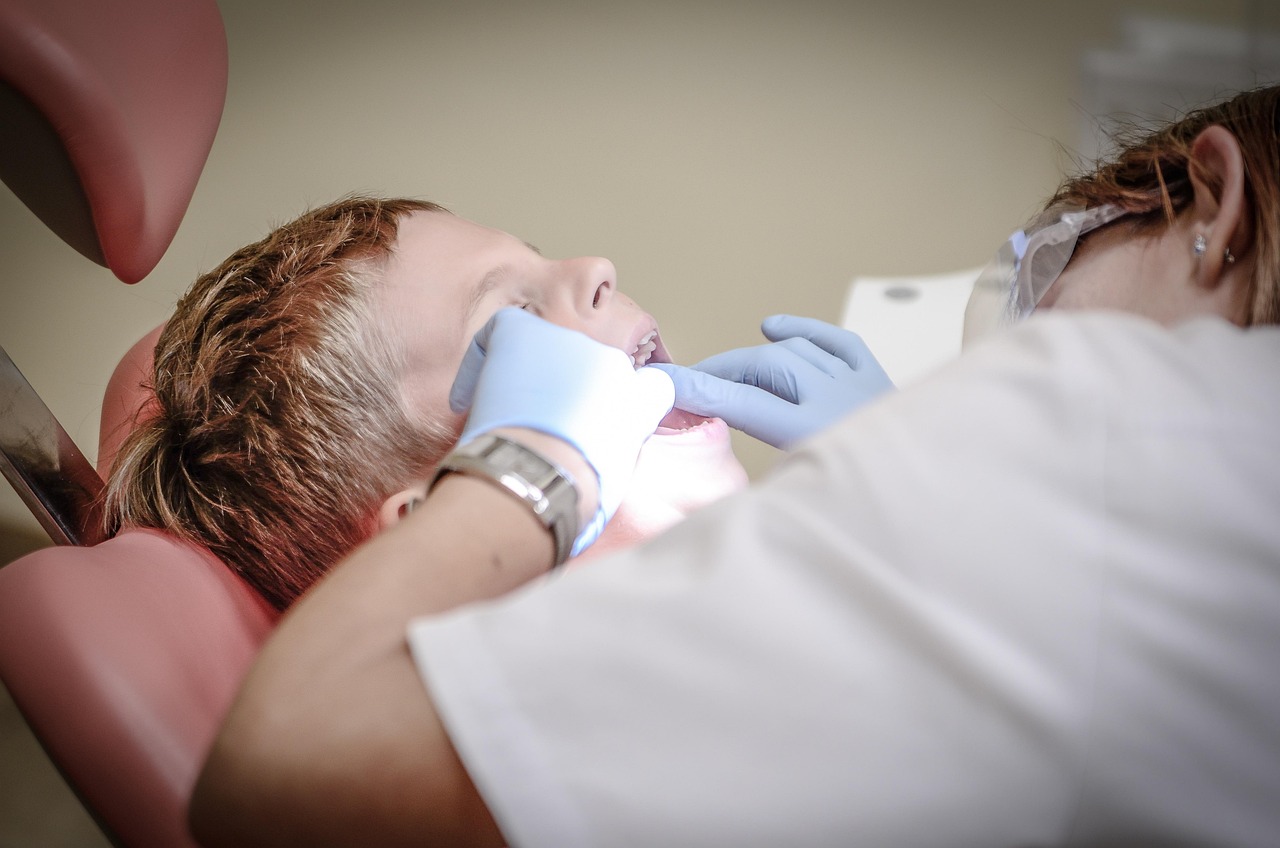
There's a new pitch making the rounds at dental conferences. It goes something like this: "Position your practice as the AI-forward clinic in your city. Patients want modern. Patients want tech. Be the AI dentist."
Maybe. But here's the thing. Branding is a promise. And when you brand around a technology that most of your patients don't fully understand, and that your provincial college is watching very carefully, you're making a promise that could be really hard to keep.
This article is about the patient-trust tradeoff in ai dentist branding. Not whether AI tools are useful in your practice (many are), but whether building your public identity around them is smart, risky, or somewhere in between. We'll look at what the regulatory environment actually allows, what patients are responding to, and how to think through the decision before you put "AI-Powered Dentistry" on your homepage.
What "AI Dentist Branding" Actually Means (And What It Doesn't)
Let me be clear about what we're talking about. AI dentist branding isn't about using AI tools internally. It's about making AI a visible, patient-facing part of your practice identity. Think: "AI-assisted diagnostics," "AI-powered treatment planning," or "the most advanced AI dental clinic in Saskatoon" in your marketing.
That's a very different thing from quietly using Pearl or Denti.AI to get a second read on an X-ray, or using AI to help your front desk with recall scheduling.
The branding question is: should AI be part of how patients find you, evaluate you, and choose you?
There are real arguments on both sides. And I think the answer depends on your market, your patient base, and how much risk you're comfortable carrying, both reputationally and from a regulatory standpoint.
For context on how this fits into your broader digital presence, our full breakdown of dentist SEO covers the foundational visibility work that underpins any branding decision you make.
What Your Provincial College Actually Allows
This is the piece most marketing agencies won't tell you about, because most of them aren't tracking Canadian dental regulations.
The RCDSO (Royal College of Dental Surgeons of Ontario) has clear advertising guidelines. Dentists cannot make claims that are unclear, untrue, misleading, or not backed by scientific evidence. They cannot claim superiority, uniqueness, or create unrealistic expectations. Superlative claims like "#1 rated," "most advanced," or "top technology" are explicitly prohibited.
That matters a lot for AI dentist branding. Because the natural language of AI marketing leans heavily on superlatives. "Most advanced diagnostics." "AI-powered precision." "The future of dentistry, today." All of that runs directly into RCDSO territory.
The RCDSO also holds dentists responsible for all clinic-related advertising, including content posted by staff or third-party agencies. So if your marketing agency writes "AI-powered dental care you can trust" on your homepage and you sign off on it, that's on you.
Other provinces have equivalent bodies. The CDSBC in BC, ADA&C in Alberta, CDSS in Saskatchewan, ODQ in Quebec. While their specific wording varies, the general principle is consistent across Canada: dental advertising must be truthful, not misleading, and not create unrealistic expectations. "AI-powered" without a clear, factual explanation of what that actually means in your practice is a grey area at best.
Here's what I'd recommend before you put any AI claim in your public marketing: pull your provincial college's advertising guidelines and read them. Then read your proposed copy again. If you're in Ontario, that's the RCDSO Advertising Guidelines document. If you're in Alberta, that's the ADA&C standards. Read the actual source, not a summary.
For a closer look at how AI content creation itself intersects with these rules, the RCDSO and CDSBC rules around AI content for dentists is worth reading before you write a single word.
What Patients Are Actually Responding To
Here's an honest observation from working across practices: most patients aren't searching for "AI dentist." They're searching for "dentist near me," "family dentist," "dentist open Saturday," and "dentist Saskatoon." Per DataForSEO's Canadian keyword data, "dentist near me" pulls 246,000 searches per month in Canada with a CPC of CA$13.69. "AI dentist" has no measurable search volume in Canada.
That's not a knock on the technology. It's just reality. Patients are looking for someone they can trust to not hurt them, someone close to where they live, someone who takes their insurance, and someone with decent reviews. AI is not in that consideration set yet for most Canadians.
That said, I think there's a real secondary effect here. When a patient lands on your website after finding you through a "dentist near me" search, what they see shapes their impression of you. A practice that mentions specific technology in a factual, confident way ("we use AI-assisted X-ray analysis to catch early-stage decay") reads as competent and thorough. That's different from leading with "AI-Powered Dentistry" as your headline. One is a proof point. The other is a brand claim that raises more questions than it answers.
In my experience, practices that integrate specific technology mentions into their service descriptions, rather than making AI the centrepiece of their brand, tend to get better patient response. It's the difference between being the hero of your own story and helping the patient feel like they're making a smart choice. The second one works better.
This is closely connected to how patients are already using AI tools like ChatGPT for symptom checks, which is worth reading if you're thinking about how to position your practice in a world where patients arrive more informed (and sometimes more anxious) than before.
The Trust Tradeoff, Spelled Out
Let me put the actual tradeoff on the table.
The case for AI dentist branding:
Some patient segments, particularly younger urban patients, tech-adjacent professionals, and parents of young children who research everything, do respond positively to technology signals. If you're in a market with a lot of these patients, and your competitors all look the same, a clear technology story can be a real differentiator. It signals investment, modernity, and attention to quality.
There's also a recruitment angle. If you're trying to attract associate dentists or hygienists who care about working with current tools, your public-facing brand communicates that.
The case against:
The trust risk is real. If a patient comes in expecting "AI-powered dentistry" and their experience feels exactly like every other dental appointment they've ever had, there's a gap. That gap erodes trust. And eroded trust shows up in reviews, referrals, and cancellation rates.
There's also the regulatory exposure. Making claims you can't substantiate specifically, factually, and in plain language puts you in a difficult position with your provincial college.
And there's the search reality. If no one is searching for "AI dentist," you're not getting SEO benefit from the brand positioning. You're just carrying the risk without the traffic upside.
The worked math:
Assume your practice brings in 25 new patients per month. Your cost per new patient is around CA$200 (a reasonable middle of the CA$150-$400 benchmark range for general practice). That's CA$5,000 per month in patient acquisition cost.
Now assume your AI branding claim triggers a provincial college inquiry. Even a minor compliance review costs you time, legal fees, and potentially a required rebrand. Conservative estimate: CA$3,000-$8,000 in direct costs, plus the distraction. That's 15-40 new patients worth of acquisition cost, gone.
The math isn't catastrophic. But it's real. And it's a cost that's entirely avoidable if you make factual, specific claims instead of broad branding statements.
How to Think Through the Decision: A Week-by-Week Process
If you're genuinely considering AI as part of your practice brand, here's how I'd approach the decision before committing to anything public-facing.
Week 1: Audit what you actually have.
List every AI tool your practice currently uses or is trialling. Be specific. "We use Pearl for radiograph analysis" is a real claim. "We use AI" is not. If you can't list at least two or three specific tools with specific, explainable functions, you don't have enough substance to build a brand around yet. Also pull your provincial college's advertising guidelines this week. Read them fully.
Week 2: Talk to five patients.
Not a survey. Actual conversations. Ask them what "AI dentistry" means to them, whether it matters in their decision to choose a dentist, and what would make them more or less comfortable with it. You'll get a fast read on whether your specific patient base is receptive or indifferent. In my experience, the results are often surprising, and they're almost always more useful than any industry trend report.
Week 3: Write the factual version.
Draft your AI-related copy as specific, verifiable claims. "We use AI-assisted analysis on every set of X-rays to help catch early-stage issues that can be easy to miss." That's a claim you can stand behind. Compare it to "AI-Powered Dental Care." One builds trust. One invites scrutiny. Get both in front of someone who isn't in your industry and ask which one makes them more confident.
Week 4: Check it against the regulatory standard.
Take your draft copy to your provincial college's advertising guidelines. Read each claim against the standard. If a claim is unclear, untrue, misleading, or creates unrealistic expectations, cut it or rewrite it. If you're in Ontario, that's the RCDSO standard. If you're uncertain, a quick call to your college's registrar office is worth the time.
Month 2: Pilot, don't commit.
Don't rebrand around AI. Instead, add specific technology mentions to your service pages, Google Business Profile description, and new patient intake materials. Track whether new patients mention it. Track whether it changes your conversion rate from website visitor to booked appointment. Give it 60 days before you decide whether it's worth making a bigger brand commitment.
This connects to the broader question of how AI tools fit into your practice operations, which covers the intake, recall, and booking side of the AI conversation, separate from the branding question.
The Smarter Play: Proof Over Positioning
Here's where I land on this.
The practices that are going to benefit most from AI in their marketing aren't the ones who brand loudest around it. They're the ones who use it well enough that they can describe it specifically, and who make that specificity part of how they communicate quality.
"We review every set of X-rays with AI-assisted analysis" is a proof point. It's specific. It's verifiable. It communicates investment in patient outcomes without making a claim your college will question.
That's the hero framing I think works here. You're not the AI dentist. You're the dentist who uses the best available tools to make sure your patients get the most accurate diagnosis possible. The patient is the hero of that story. You're the thorough, careful clinician who's on their side.
That framing also holds up better in reviews, in referrals, and in the chair-side conversation where the real trust gets built.
For the full picture on how your digital presence supports that trust-building, our digital marketing guide for dentists covers the channels and tactics that back up whatever brand story you're telling. And if you're thinking about how your website communicates your brand, the dentist website design guide is worth a read before you make any copy changes.
The Canadian Dental Care Plan (launched 2024) is also shifting patient demographics in a way worth noting. Practices accepting CDCP are seeing new patient segments who are price-sensitive and often first-time regular dental patients. For that audience, "AI-powered dentistry" is likely less compelling than "we accept the Canadian Dental Care Plan and we'll explain everything before we do it." Know your patient.
Frequently Asked Questions
Can I say "AI-assisted" in my marketing without running into regulatory problems?
Generally, yes, if the claim is factual and specific. "We use AI-assisted radiograph analysis" is a verifiable claim tied to a real tool with a real function. "AI-powered dentistry" is a vague superlative that's harder to defend. The RCDSO standard requires that claims be backed by fact and not misleading. Specific beats vague every time, both for patients and for regulators.
What if my competitors are already using AI branding?
That doesn't mean they're doing it correctly from a regulatory standpoint. It also doesn't mean it's working. I'd focus on what your patients are actually responding to rather than matching a competitor's positioning. If you want to understand what's driving their visibility, the dentist SEO guide covers how to read a competitor's search footprint.
Does AI branding help with Google rankings?
Not directly. Google ranks pages based on relevance, authority, and user experience, not on whether you've described yourself as AI-powered. If anything, vague brand language can hurt your SEO by making your service pages less specific and less useful to someone searching for "family dentist in Saskatoon." For a full breakdown of what actually moves your rankings, see the dental office marketing strategies guide.
What about AI chatbots and booking tools? Should those be visible?
That's a different question than brand identity. A chatbot on your website that helps patients book appointments or get answers to common questions is a user experience feature. You can mention it as a convenience. "Book online anytime, or chat with us 24/7" is a patient benefit statement. That's different from building your brand identity around AI. The AI for dental practices guide covers the operational tools in more detail.
Should a new grad opening their first practice lead with AI branding?
I'd be cautious. When you're building a patient base from scratch, trust is the primary currency. Patients choosing a new practice want to feel confident in the clinician first. Technology is a secondary signal. Lead with your training, your approach to patient care, and your accessibility. Let the AI tools be a quiet proof point in your service descriptions, not your headline. For a broader look at how to think about your marketing strategy as a new practice, the dental practice marketing strategy guide is a good starting point.
Related Reading
- Dentist SEO: The Complete Guide for Canadian Practices
- AI for Dental Practice Operations: Intake, Chatbot, Recall, Booking
- Can Your Dental Practice Use AI for Content? RCDSO/CDSBC/CDSS Rules
- Is Your Practice Showing Up in ChatGPT? AI Visibility Check for Dentists
- Dentist Website Design: Best Practices & Examples