
Trucking Marketing for Canadian Fleets
Trucking Company Marketing: A Real Playbook for Canadian Carriers
By Kyle Senger
15+ years in local marketing; Google Ads certified; Shopify Partner.
TLDR
Canadian trucking companies need two separate marketing structures in 2026: one for driver recruitment and one for freight-win, with budgets ranging from CAD $1,500 to $8,000 per month depending on fleet size.
- Driver recruitment: cost per qualified Class 1 hire frequently reaches CAD $4,500 per quarter for carriers under 25 trucks, with most applications disqualified by weak pre-screening copy.
- Compliance risk: "be your own boss" ad copy creates audit exposure under post-Bill C-86 CRA driver classification rules, and CASL fines reach CAD $10 million for non-compliant shipper email outreach.
- Freight-win SEO: lane-specific terms like "flatbed freight Calgary to Vancouver" convert at higher rates than generic keywords, per DataForSEO Q1 2026.
- Agency vetting: ask whether the agency knows what MELT, Driver Inc, and Loadlink Canada mean before signing anything.
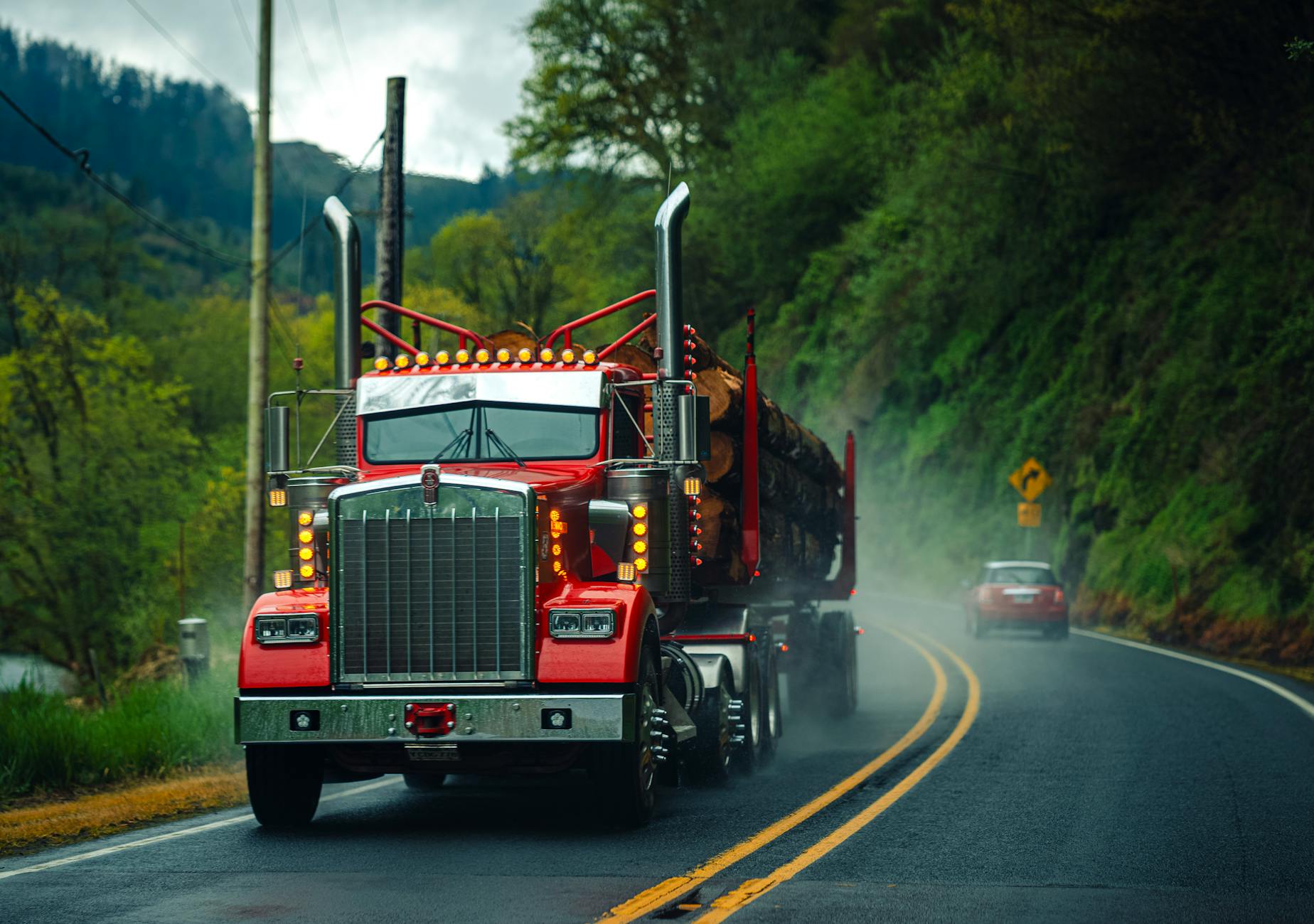
Here's the thing about trucking company marketing in Canada: most of the advice out there was written for US fleets, by agencies that have never seen a Loadlink posting, don't know what MELT means, and think "Driver Inc" is a startup name.
That gap matters. A lot.
If you run 15 trucks out of Regina or 60 flatbeds out of Calgary, the marketing problems you're solving are genuinely different from what a Nashville carrier faces. Different regulations. Different driver licensing paths. Different shipper relationships. Different associations (AMTA, STA, CTA) with real weight in how your industry operates.
This article is for Prairie and Canadian carriers, freight brokers, and 3PLs who want an honest look at what trucking marketing actually costs, what works, what's legally risky to say, and when it makes sense to hire someone versus do it yourself. I'll cover driver recruitment marketing, freight-win marketing, website basics, and the compliance traps that can turn a well-meaning ad into a CRA headache.
What this article won't do: give you a generic "post on LinkedIn and start a blog" checklist. You've seen that article. It didn't help.
The Two Problems You're Actually Trying to Solve
Trucking company marketing isn't one problem. It's two distinct problems that most carriers try to solve with one underfunded budget.
Problem one: driver recruitment. The Canadian trucking industry was already facing a structural driver shortage before 2026. The Canadian Trucking Alliance has cited a projected shortage of roughly 20,000 drivers by 2030. Turnover in the 60-90% range annually is common for carriers under 100 trucks. That means recruiting isn't a one-time campaign. It's a permanent operating cost.
Problem two: freight-win. Shippers are increasingly bypassing brokers and posting directly on load boards (DAT, Loadlink Canada) or running their own digital RFQs. If your marketing can't tell a shipper why they should call you instead of posting to a board, you're competing on rate alone. That's a race you don't want to run.
Here's the thing: these two problems need different messages, different channels, and different landing pages. Mixing them on a single generic website with a stock photo of a Peterbilt that isn't yours doesn't serve either audience. I've seen this exact situation with a 60-truck flatbed carrier in Calgary whose previous agency built a beautiful site that talked about "reliable freight solutions" and generated zero shipper inquiries. The site wasn't wrong, exactly. It just wasn't specific enough to mean anything to anyone.
The fix starts with separating your two audiences and building a marketing structure that speaks to each one directly. For a deeper look at how that plays out channel by channel, our trucking lead generation breakdown covers driver-recruit and freight-win channels ranked by cost and conversion.
What Trucking Marketing Actually Costs in Canada
Let me give you some real numbers, because vague ranges don't help you defend a budget line when freight rates are soft.
Retainer fees: For a 5-50 truck carrier or freight broker, expect to pay CA$1,500-$5,000/month for a marketing agency retainer. For a 50-100 truck carrier running separate driver-recruitment and freight-win campaigns, that range moves to CA$3,000-$8,000/month. These are Canadian dollars, which matters when you're comparing against US platforms that quote USD.
Ad spend: Driver-recruitment ad spend typically runs CA$2,000-$10,000/month across Indeed Canada, Facebook, Google, and TikTok. Freight-win and shipper outreach on Google and LinkedIn usually runs CA$1,000-$5,000/month separately.
Website builds: A proper trucking website with separate driver and shipper funnels runs CA$5,000-$30,000 depending on complexity. A basic Wix template costs less upfront and costs you more every month in missed conversions.
Recruiting platforms: Tenstreet runs $250-$2,000 USD/month (roughly $345-$2,760 CAD at current exchange). Drive My Way has similar fee structures. These platforms have their place, but they're not a substitute for a recruitment funnel you actually own.
Here's a worked example. Say you're a 22-truck carrier in Saskatoon spending CA$4,500/month across Indeed and Facebook and a Tenstreet subscription. If you're getting 3 qualified Class 1 applicants per quarter, your cost per qualified driver is $4,500 × 3 months ÷ 3 drivers = $4,500 per qualified hire. That's not a typo. And that's before onboarding costs.
The question isn't whether $4,500 per hire is too high in isolation. It depends on your turnover rate and your cost of an empty seat. But you need to know that number. Most carriers I talk to don't.
For trade shows like Truck World Toronto or the Saskatoon Trucking Show, budget CA$10,000-$30,000 for booth costs, plus CA$5,000-$25,000/year in collateral refreshes. The problem isn't the spend. It's that most carriers leave those shows without any pipeline tracking. You can't tell which leads came from the booth versus a cold call made the same week.
The Compliance Traps That Can Wreck Your Marketing
This is the section most marketing guides skip. I'm not skipping it, because getting this wrong isn't just embarrassing. It can expose you to CRA audits, provincial enforcement, or regulatory sanctions.
Driver Inc and CRA classification. Post-Bill C-86, CRA has been actively auditing carriers that classify employee-equivalent drivers as independent contractors. The marketing implication: if your driver recruitment ads say "be your own boss" or "flexible schedule, you set your hours," you may be creating evidence that your drivers have contractor-level autonomy. If CRA later determines those drivers are actually employees, that marketing copy becomes a problem in the audit file. Don't use "be your own boss" messaging for company drivers. Full stop.
National Safety Code claims. Under NSC Standard 7, your carrier safety rating is a public profile. If you're marketing "top safety record" or "Canada's safest fleet," that claim needs to be substantiated by your actual NSC profile. Carriers with unsatisfactory ratings who run safety-forward ads are creating a mismatch that regulators and shippers can verify in about 30 seconds.
NSC Standard 9 (Hours of Service) is the other one to watch. If your recruitment ads promise "unlimited home time" or "flexible scheduling," you need those claims to be consistent with Canadian Hours of Service regulations. Under Standard 9, a driver is capped at 13 hours of driving and 14 hours on-duty per day, with mandatory 10-hour off-duty periods. Promising something that would require violating HOS rules is both legally risky and practically dishonest to the driver you're recruiting.
FAST/PIP/C-TPAT claims. If you're marketing to cross-border shippers and claiming FAST or PIP certification, that status needs to be current and verifiable through CBSA's public tools. Lapsed certification is not a marketing detail. It's a material misrepresentation.
CASL and cold email to shippers. Under CASL (Canada's Anti-Spam Legislation), sending commercial electronic messages to shipper procurement contacts requires either express or implied consent. Cold emailing a list of logistics managers you scraped from LinkedIn is not compliant without a legitimate basis for implied consent. Fines go up to $10 million. This doesn't mean you can't do email outreach. It means you need to structure it correctly.
Quebec Bill 96. If any of your marketing reaches Quebec-based shippers or drivers, you need French-language versions. This applies to digital ads, website pages, and print collateral. The Office québécois de la langue française (OQLF) enforces this. It's not optional.
I know this section is dense. But here's the thing: a marketing agency that doesn't know these rules isn't just unhelpful. They're a liability.

Driver Recruitment Marketing: What Actually Works
Driver recruitment is where most carriers waste the most money, and it's usually because they're optimising for application volume instead of qualified application volume.
The owner of a regional carrier in Saskatoon put it plainly: he spends $4,500/month across Indeed, Facebook, and Tenstreet, gets maybe 60-80 applications a quarter, and 3 of them are qualified Class 1 drivers. The rest are unqualified, scammers, or US drivers who don't have TN status and don't realize they need it. That's not a volume problem. That's a targeting and messaging problem.
What changes the numbers:
First, your job ads need to pre-qualify. If you're running Indeed ads without specifying Class 1 required, MELT-completed (in provinces where it's mandatory, including Ontario, Saskatchewan, Alberta, and Manitoba), and Canadian work authorization, you will drown in unqualified applicants. The ad copy is doing screening work before the application form is.
Second, Facebook and TikTok driver recruitment works differently than job boards. On Indeed, drivers are actively searching. On Facebook and TikTok, you're interrupting them. That means your creative needs to show the actual job, the actual trucks, and the actual people. Carriers who post real cab-view videos of their runs, real driver testimonials (with consent), and real route information consistently outperform carriers running stock-photo ads. In my experience, carriers that show authentic behind-the-wheel content see meaningfully higher application quality than those running polished but generic creative.
Third, build a dedicated driver recruitment landing page. Not your homepage with a careers tab buried in the navigation. A page with the job details, the pay structure (per-mile, percentage, hourly, whatever your model is), the home-time reality, the truck specs, and a short application form. That page should also be clear about licensing requirements so you're not wasting anyone's time.
For a full channel-by-channel ranking of driver recruitment versus freight-win spend, see our trucking lead generation guide.
Freight-Win Marketing: How to Get Shippers to Call You
Winning freight from shippers is a different game than recruiting drivers. You're not interrupting someone on Facebook. You're trying to show up when a logistics manager in Edmonton or Winnipeg types something specific into Google, or when a procurement team at a manufacturer is evaluating carriers for a lane contract.
SEO for freight-win. Here's what most generic trucking websites get wrong: they optimize for "trucking company" when they should be optimizing for the specific lanes, commodities, and equipment types they actually run. A flatbed carrier in Calgary should be ranking for terms like "flatbed freight Calgary to Vancouver" or "oversize load transport Alberta." A reefer carrier in Saskatoon should own "refrigerated trucking Saskatchewan." These are lower-volume searches, but the intent is specific and the conversion rate is much higher than generic traffic.
The DataForSEO data shows that "trucking company advertising" in Canada has a CPC of CA$6.48 with high competition. That's the paid side. The organic side for most lane-specific and equipment-specific terms is wide open, because most carriers haven't bothered to build content around them.
Google Ads for freight-win. Paid search works for freight-win, but you need to be precise with your targeting. Broad keywords like "trucking company" will drain your budget on irrelevant clicks. Tight, intent-specific campaigns around your actual service area and equipment type are where the return is. A 50-truck flatbed carrier in Alberta running a well-structured Google Ads campaign targeting lane-specific queries can generate qualified shipper inquiries at a reasonable cost per lead, but only if the landing page they arrive at is specific to that lane and equipment. Sending paid traffic to a generic homepage is burning money.
LinkedIn for shipper outreach. For mid-market carriers pursuing contract freight from manufacturers, distributors, or retailers, LinkedIn is underused. A carrier principal or sales lead with a well-maintained LinkedIn presence, posting about their lanes, their equipment, and their service record, can generate inbound shipper conversations that load boards never will. This isn't about going viral. It's about being findable and credible when a procurement manager looks you up after a referral.
Our Prairie-specific trucking marketing guide covers the seasonal dynamics that affect freight-win marketing in SK, AB, and MB, including harvest cycles, oilfield seasonality, and how those affect your messaging calendar.
Your Trucking Website: The Asset Most Carriers Are Ignoring
I want to spend a minute on this because it's the piece that connects everything else.
Most trucking websites in the 5-100 truck range look the same. Stock photo of a truck that isn't yours. A paragraph about "reliable freight solutions." A contact form that goes to a generic email address. No driver recruitment section. No lane or commodity specifics. No proof of anything.
That site isn't neutral. It's actively working against you, because when a shipper or a driver lands on it, they have no reason to choose you over anyone else.
A properly built trucking website does three things: it tells shippers exactly what you haul, where you run, and why you're the right carrier for that lane. It gives drivers a clear picture of what the job actually looks like and makes it easy to apply. And it's built so Google can actually find it for the specific searches your ideal shippers and drivers are running.
The structural elements that matter: separate shipper and driver sections (not just tabs, actual distinct pages with distinct messaging), lane and commodity pages with real specifics, photos and video of your actual fleet and team, a fast mobile experience (most driver applicants are on a phone), and a contact or application path that takes fewer than 60 seconds to complete.
For a detailed look at what owner-operators and fleet managers actually click on, see our trucking website design guide.
What a Real Marketing Launch Looks Like, Week by Week
Here's what the first 60 days of a proper trucking marketing engagement actually looks like. Not a sales pitch. Just the actual work.
Month 1, Week 1: Audit everything that exists. Website traffic in Google Search Console. Current ad spend and cost per application on Indeed and Facebook. Existing keyword rankings. CRM or applicant tracking data if it exists. The goal is to understand what's actually happening before changing anything. Most carriers are surprised by what this surfaces.
Month 1, Week 2: Competitive review. Look at what the 5-10 carriers competing for the same drivers and freight lanes are doing with their websites, their ads, and their Google Business Profiles. Not to copy them. To find the gaps. In my experience, most Prairie carriers have almost no SEO presence for lane-specific or equipment-specific searches, which means the gap is real and fillable.
Month 1, Weeks 3-4: Build the foundation. This usually means rewriting the homepage and creating separate driver and shipper landing pages. Setting up conversion tracking so every application and every shipper inquiry is attributed to a source. Fixing the Google Business Profile if it's incomplete. Setting up a basic Google Ads structure for freight-win with tight, intent-specific campaigns.
Month 2, Week 1: Launch driver recruitment ads. Start with one platform (usually Facebook or Indeed, depending on your target driver profile) with two or three creative variants. Real photos or video if possible. Copy that pre-qualifies on Class 1 and Canadian work authorization. Drive traffic to the dedicated recruitment landing page, not the homepage.
Month 2, Weeks 2-4: Measure, adjust, and build content. Look at which ads are generating qualified applications versus junk volume. Adjust targeting and copy based on what the data shows. Start building lane-specific content pages for SEO. These take 3-6 months to rank, so starting them in month 2 means you're building an asset that pays off over time.
By the end of 60 days, you should have real attribution data, a cleaner website, at least one driver recruitment campaign running with measurable cost per qualified applicant, and a freight-win campaign generating some shipper traffic. You're not done. But you know what's working.
DIY vs. Hiring: How to Make the Call
Here's my honest take on this.
If you're a 5-15 truck carrier with a tight budget and some time, you can do the basics yourself. Set up a Google Business Profile properly. Post real photos of your trucks and team. Write a simple page for each major lane you run. Put a clear application form on your website. Run a modest Facebook campaign for driver recruitment with real creative. These things don't require an agency. They require consistency and specificity.
If you're a 25-100 truck carrier with a real marketing budget and two distinct audiences to reach, the DIY path starts costing you more in missed opportunity than an agency would cost in fees. The complexity of running separate driver-recruitment and freight-win campaigns, managing SEO for multiple lanes, staying compliant with NSC and CRA messaging rules, and tracking attribution across channels is a real job. It's not a side project.
The trap to avoid: hiring a generic SMB agency that has never worked with a carrier before and will spend the first three months learning your industry on your dime. Ask any agency you're evaluating whether they know what MELT is, what Driver Inc means under CRA rules, and what Loadlink Canada is. If they can't answer those questions, they're going to give you a website with a stock Peterbilt and copy about "reliable freight solutions." You've already seen that site. It doesn't work.
For a detailed guide on evaluating and selecting a marketing agency as a mid-market 3PL or carrier, see our logistics marketing agency guide.
3 Things to Take Away From This
Trucking company marketing is genuinely complicated. But I think it comes down to three things that most carriers get wrong.
One: treat driver recruitment and freight-win as separate campaigns. Different audiences, different messages, different landing pages. Mixing them on a generic homepage serves neither audience.
Two: know the compliance rules before you write the ads. "Be your own boss" copy is a CRA risk. "Unlimited home time" copy may contradict Hours of Service regulations. NSC Standard 7 safety claims need to be substantiated. These aren't hypothetical concerns. They're active issues in the Canadian trucking industry right now.
Three: specificity wins. The carrier with a flatbed-specific page targeting Calgary-to-Vancouver lanes will outperform the carrier with a generic "we haul freight" page. The driver recruitment ad that shows your actual trucks and names your actual pay structure will outperform the stock photo ad. Specificity is the thing that separates carriers who generate real inquiries from carriers who wonder why their marketing isn't working.