
Construction marketing
Construction Company Website Design: What Actually Drives Consult Calls
By Kyle Senger
15+ years in local marketing; Google Ads certified; Shopify Partner.
TLDR
A construction company website drives consult calls by filtering unqualified buyers before they reach your estimator, a function that a properly built WordPress site in the CAD $12,000 to $20,000 range handles better than template providers or Wix builds.
- Core job: the site must answer three questions in four seconds: what you build, where you build it, and what budget you serve.
- Five pages: Homepage, Portfolio, Process, About, and Contact each carry specific conversion work, with the intake form on Contact pre-qualifying budget and timeline before leads hit your inbox.
- Technical floor: Google PageSpeed score above 70 on mobile, your own domain, your own hosting account, no exceptions.
- Compliance: Bill C-59 (June 2024) requires substantiated proof behind any green claim, and HCRA, Alberta New Home Buyer Protection Act, and Saskatchewan New Home Warranty Program disclosures must be accurate.
- Red flag: any agency that starts with design before copy, or hosts your site on their own account.
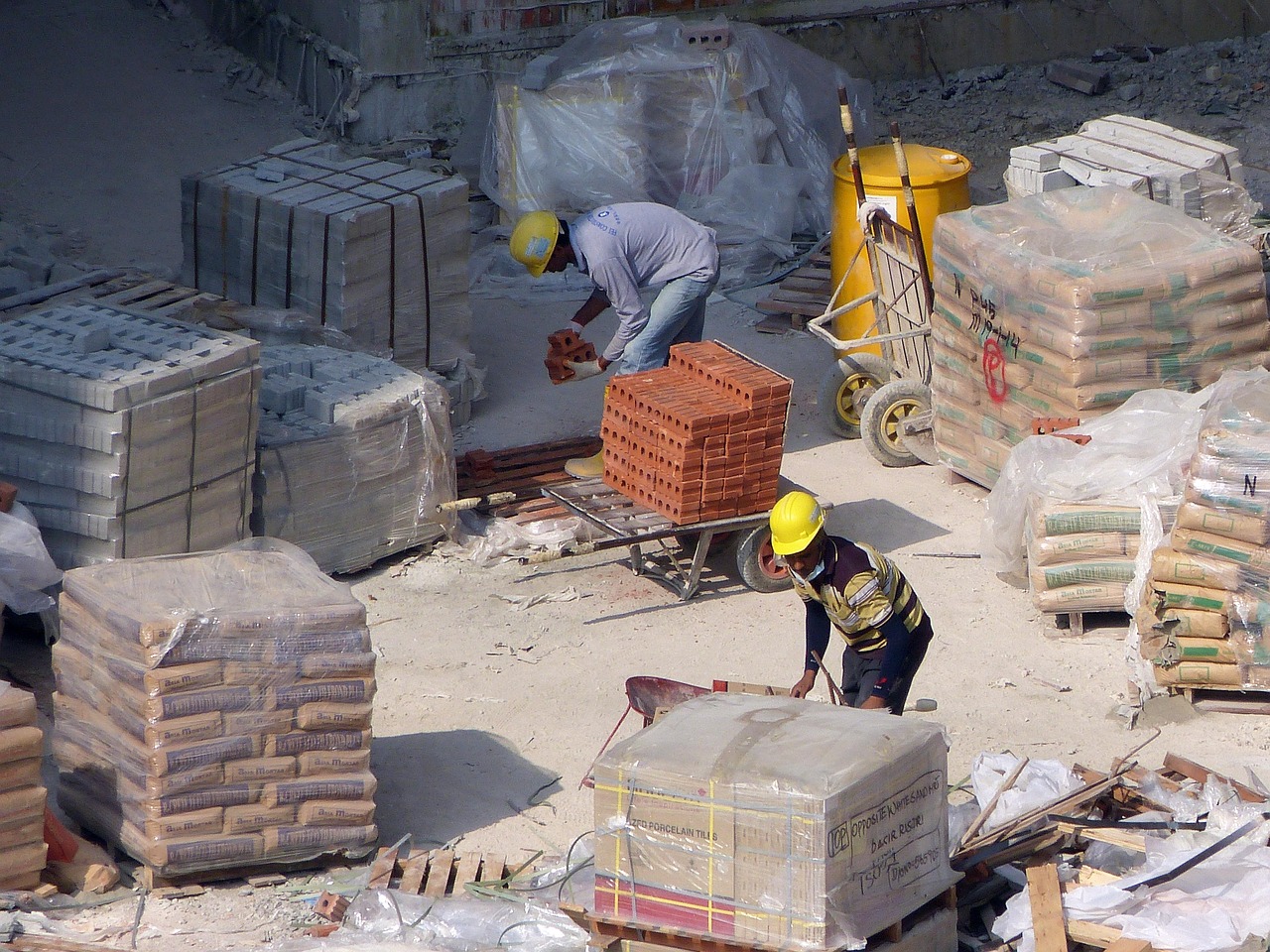
Picture this. You're a custom builder in Regina. You do $4-5M a year. You've got a website, you paid decent money for it, and it looks good on your phone. But when someone searches "custom home builder Regina," you're on page two. And when someone does find you, they fill out a contact form asking about a $180K renovation you don't do.
That's the construction company website design problem nobody talks about. It's not about looking good. It's about attracting the right buyer, at the right budget, for the right build type, and getting them to book a consult call.
This article is specifically about your website. Not your Google Ads, not your social presence, not your SEO strategy as a whole. Just the site itself: what it needs to do, how to build it right, and what to watch out for. If you want the bigger picture on all 12 marketing channels, our complete guide to construction marketing covers that ground.
Your Website Has One Job (And It's Not Winning Design Awards)
I think a lot of builders get sold on the wrong success metric for their website. The agency shows them a beautiful homepage, a nice project gallery, some clean typography. The builder says "yeah, that looks great." And then... nothing changes in their pipeline.
Here's the thing: your website's job is to convert qualified visitors into consult calls. That's it. Not to impress architects at a dinner party. Not to win a Webby Award. Not to "tell your brand story."
A qualified visitor for a custom home builder in Saskatoon is someone searching for a builder in Saskatoon, with a $1M+ budget, who's ready to talk to someone in the next 30-60 days. Everything on your site should be designed to get that person to book a call, and to quietly discourage the tire-kickers before they burn your estimator's afternoon.
Most builder websites fail at this because they're built for aesthetics, not for conversion. The agency optimizes for "wow factor" in the presentation meeting. You sign off on it. And then you wonder why you're getting 30 inquiries a month and maybe 2 of them are worth following up.
In my experience, the sites that actually drive consult calls share a few things in common. They're specific about who they build for. They show real project costs (or at least ranges). And they make it dead simple to book a call, not just "submit a form and wait."
The Five Pages That Actually Matter for a Builder Website
You don't need 40 pages. You need five that do real work.
1. Homepage
Your homepage has about 4 seconds to answer three questions for a visitor: What do you build? Where do you build it? Who is this for? If someone lands on your homepage and can't answer those three questions immediately, you're losing them.
The mistake I see constantly: generic hero copy like "Building Your Dream Home Since 1998." That tells me nothing about whether you're the right builder for me. Compare that to: "Custom homes in Regina and White City. $800K to $2.5M. 12-18 month builds." Now I know if I'm in the right place.
Your homepage should also have a clear, single call to action above the fold. Not "Learn More." Not "Explore Our Projects." Something like "Book a Free Consult" or "See If We're the Right Fit." One action. One button.
2. Project Portfolio
This is where builders usually over-invest in visuals and under-invest in information. Beautiful photos are table stakes. What actually converts buyers is context: what was the budget range? What was the timeline? What was the build type? What city?
A portfolio page that says "Lakewood Estates, Regina, 2024. 3,400 sq ft, $1.2M build, 14-month timeline" does more work than 20 photos with no context. It pre-qualifies the buyer before they ever talk to you.
3. Process Page
Buyers at the $800K+ level are anxious about the process. They've heard horror stories. They don't know what to expect. A clear, honest process page that walks them through what happens from first consult to move-in day builds more trust than any testimonial.
Walk them through the steps. Be specific about timelines. Tell them what you need from them and when. This page is where you separate yourself from builders who feel like a black box.
4. About Page
People hire people, not companies. Your about page should feel like a real person wrote it, not a corporate bio. Talk about why you build, what you care about, what you won't do. If you've been building in Saskatchewan for 20 years, that's relevant. Say it plainly.
5. Contact / Book a Consult Page
This is the page most builders treat as an afterthought and it's arguably the most important one. A generic contact form with five fields and a "someone will get back to you" message is a conversion killer. Consider a short intake form that asks budget range, build type, and timeline. It pre-qualifies leads before they hit your inbox, and it signals to serious buyers that you're organized and professional.
What Needs to Be Under the Hood (The Technical Stuff That Actually Matters)
I'm not going to bury you in technical jargon here. But there are a few things that matter for a construction website specifically.
Page speed. Google's Core Web Vitals are a real ranking factor. Per DataForSEO data, "construction company website design" keywords have very low competition in Canada, which means your site's technical quality becomes a differentiator almost immediately. Use Google's free PageSpeed Insights tool to check your score. You're aiming for a score above 70 on mobile. Most builder sites I see are in the 30-50 range because they're loaded with full-resolution portfolio photos that nobody compressed.
Mobile-first. The majority of your initial traffic is coming from someone on their phone, probably standing in a kitchen or sitting in their car after a conversation with their spouse. Your site needs to work perfectly on a 390px screen. Not "fine" , perfectly.
Your own domain and hosting. This is a big one. If a previous agency built your site on Wix or Squarespace and it's connected to their Google Business Profile, you have a problem waiting to happen. When that relationship ends, you can lose access to your own digital presence. Your site should be on your own domain, hosted on your own account, with your own login credentials. Always. This is non-negotiable.
Platform choice. WordPress is still the right choice for most builder sites in the $10K-$35K range. It gives you control, flexibility, and you're not locked into a vendor's stack. Webflow is a reasonable alternative if you want cleaner design control. Wix and Squarespace are fine for a $500 portfolio site. They're not fine for a business doing $4M a year that needs to rank for competitive local queries.
For construction company SEO specifically, WordPress with a solid SEO plugin (Yoast or RankMath) gives you the most control over your technical setup.
What a Real Website Build Looks Like, Week by Week
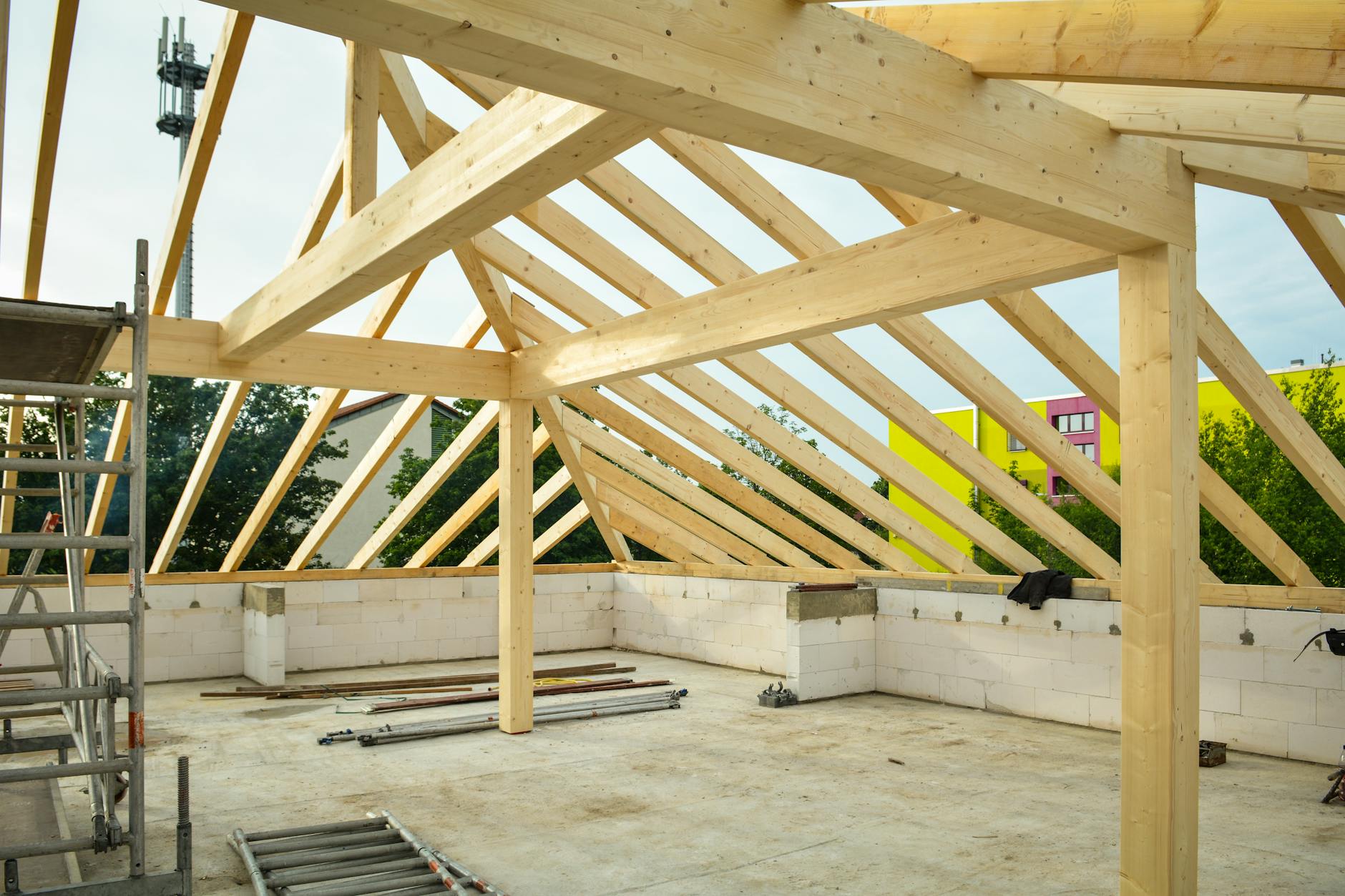
Here's roughly how a well-run construction website build goes from kickoff to launch. I'm describing a $12,000-$20,000 project for a Prairie builder with 20-40 portfolio projects and a Google Ads integration.
Week 1-2: Discovery and content strategy
This is where most agencies skip ahead and where most bad websites start. You need to answer: Who is the target buyer? What are the 3-5 build types you want to attract? What cities are you targeting? What's the budget range you want to signal? What do you not want to build?
The answers to these questions drive every page structure, every headline, and every call to action on the site. If an agency jumps straight to design before you've answered these, that's a red flag. For more on vetting agencies, see how to pick a construction marketing agency in Canada.
Week 3-4: Content and copy
Before a single design mockup exists, the copy should be drafted. Headlines, body copy, calls to action, process descriptions. This is the hardest part and the part most agencies outsource to a generic copywriter who's never been on a job site. The copy needs to speak like a builder, not like a marketing robot.
Week 5-6: Design mockups
Now design starts. The designer works from the copy, not the other way around. You'll see desktop and mobile mockups for the homepage, portfolio, process, about, and contact pages. This is where you give feedback. Expect two rounds of revisions.
Week 7-8: Development
The approved designs get built in WordPress (or your chosen platform). This is also when portfolio photos get compressed and optimized, Google Analytics and Search Console get connected, and the contact form gets tested end-to-end.
Week 9: Review, QA, and launch
You review the live staging site. The developer runs through a QA checklist: mobile responsiveness, page speed, form submissions, 404 errors, redirect setup from any old URLs. Then you launch.
Week 10 and beyond: First 30 days of data
This is where a good agency stays with you. You're watching for: which pages get the most traffic, where people drop off, how many form submissions you're getting, and whether the phone is ringing. If you're running Google Ads alongside the launch, you're also watching cost per lead from day one.
Worked Example: What a Consult-Optimized Site Actually Costs to Run
Let me show you the math on a realistic scenario.
Say you're a production builder in Regina doing $4M a year. You need 20 qualified-buyer consults annually to hit your pipeline. That's roughly 2 per month.
Your website is your primary conversion tool. Let's say you invest $15,000 in a properly built site. Amortized over 3 years, that's $417/month in website cost.
Now add hosting and maintenance: roughly $150-$200/month for managed WordPress hosting with regular updates and backups.
Total website infrastructure cost: roughly $600/month.
If your site converts at even a modest rate, say 2 qualified consult bookings per month from organic and paid traffic combined, you're paying $300 per consult from the website side alone.
Compare that to Houzz Pro premium at CA$199-$399/month where, per the pattern I described above, builders typically report 80% of inquiries are tire-kickers with no real budget. You might get 30 inquiries for $300/month, but if only 2 are real buyers, you're at the same $150/qualified lead, except now your estimator has burned 28 hours vetting the other 28. Your own site doesn't have that problem if it's built to pre-qualify.
This also connects to the broader construction lead generation question. Your website is the only lead source where you own the asset and control the qualification criteria.
The Legal Stuff You Can't Ignore
A few things specific to Canadian builders that your agency needs to know about.
Greenwashing rules. Under Bill C-59's June 2024 amendments to the Competition Act, any environmental or energy-efficiency claim on your website needs to be substantiated. "Net-zero ready," "energy-efficient build," "sustainable construction" , if you're putting these on your site without specific technical backing (EnerGuide ratings, ENERGY STAR certification, etc.), you're exposed. This isn't theoretical. The Competition Bureau has been actively enforcing these provisions. If your current site has vague green claims, pull them or back them up.
Builder licensing. Your website should accurately reflect your registration status. In Alberta, the New Home Buyer Protection Act (SN 2014 c N-2.1) requires mandatory enrolment and licensing for new home builders. In Ontario, HCRA licensing is mandatory under the Home Construction Act, 2019. In Manitoba, new home warranty registration is mandatory. Promoting builds in those provinces without proper licensing disclosure creates exposure for you and for any agency that helped write the copy.
Warranty claims. Saskatchewan's New Home Warranty Program is voluntary, but if you're enrolled, you can say so. What you can't do is imply coverage you don't have. "Backed by a full warranty" means nothing legally. "Enrolled in the Saskatchewan New Home Warranty Program with 1-2-5-10 coverage" means something.
If your agency is writing your website copy and they don't know what Tarion is, or they've never heard of the Alberta New Home Buyer Protection Act, that's a problem. These aren't obscure regulations. They're the basic operating rules of your industry.
Red Flags to Watch For When Hiring for a Website Build
- They build on their own hosting account. You should own your site. If they host it and you leave, you lose it.
- They start with design before copy. Beautiful sites built on generic copy don't rank and don't convert.
- They can't tell you how they'll track leads. "Traffic" is not a metric. "Consult calls booked from organic search" is a metric.
- The portfolio is all US builders. Prairie markets have different search behaviour, different regulatory requirements, and different buyer expectations than Phoenix or Dallas.
- They pitch a template. Builder Designs and similar OEM-style template providers can work in some US markets. They typically don't rank for Regina or Saskatoon queries because they're not built for Canadian local search.
- They lock you into a monthly fee to "own" your site. You should pay for the build once. Hosting and maintenance are separate, reasonable ongoing costs. A monthly fee that holds your site hostage is not.
For a broader look at how to evaluate who you're hiring, see how to pick a construction marketing agency in Canada, and for the marketing side of running a Prairie contracting business specifically, our general contractor marketing field guide is worth a read.