
Automotive SEO and AI Search for Dealers
Dealership AI and SEO: The Canadian Visibility Playbook
By Kyle Senger
15+ years in local marketing; Google Ads certified; Shopify Partner.
TLDR
Canadian dealerships in 2026 are losing buyer conversations to AI engines like ChatGPT and Perplexity because OEM-bundled SEO programs on Dealer.com, DealerOn, and Strathcom don't build the entity signals, FAQ schema, or review consolidation that AI citation requires.
- AI traffic growth: Fullpath reported roughly 15x year-over-year growth in LLM-referred dealer website traffic between 2025 and 2026, making AI search a real acquisition channel, not a future concern.
- Schema gap: Per A3 Brands 2026, AutoDealer, Vehicle, and Service schema adoption sits under 40% industry-wide, leaving most Canadian VDPs uncitable by AI engines.
- Compliance risk: OMVIC, Quebec's OPC under Bill 96, and the Competition Bureau all treat AI-generated advertising copy identically to human-written copy, with no exemption for hallucinated pricing or missing all-in disclosure.
- Cost baseline: A single-rooftop program combining OEM SEO, a Canadian specialist agency, Semrush, and BrightLocal runs roughly CAD $4,485 per month in 2026.
- Measurement: Monthly manual audits across ChatGPT, Perplexity, and Google AI Overviews, cross-referenced against GA4 referral data and GBP call tracking, are the minimum viable measurement stack.
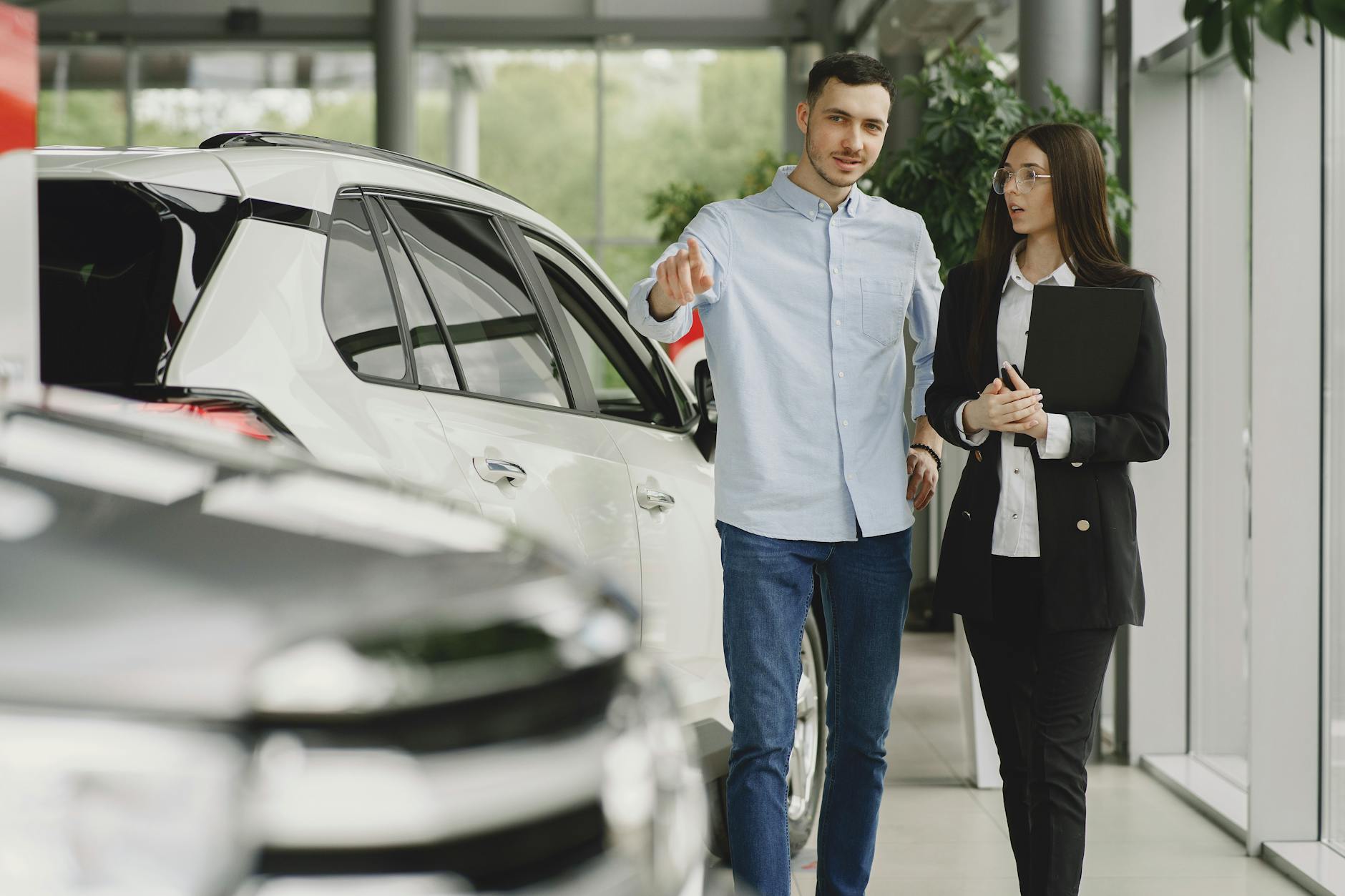
There's a quote I keep hearing from dealer principals across Western Canada. Roughly it goes: "Every OEM meeting, the same agencies pitch. I've used three of them. They all produce the same generic dashboard, and not one of them can tell me how many service appointments actually booked from the work they did."
That's the problem in one sentence. The marketing keeps happening. The reports keep arriving. Nobody can connect the spend to the gross.
This article is about fixing that. Specifically, it's about how dealership AI search and traditional automotive SEO work together in 2026, what's actually changed with how Canadian shoppers find a dealer before they ever step on the lot, and what you need to do differently if you want your store to show up, get cited, and get the call. I'm going to cover what GEO (generative engine optimization) actually means for a Canadian auto dealer, why most OEM-bundled SEO programs stop short, what the compliance landmines look like in Ontario, BC, Quebec, and federally, and how to measure whether any of this is working.
What I'm NOT going to cover: which CRM to buy, how to run your BDC, or F&I training. This is a search and AI visibility guide. If that's what you need, keep reading.
The AI Search Shift Is Already Hitting Canadian Dealerships
Let me be direct about what's changed.
A Canadian shopper in 2026 doesn't just type "Honda dealer Saskatoon" into Google and click the first result. A growing share of them open ChatGPT, Perplexity, or Google's AI Overviews and ask something like: "What's the best-rated Honda dealer in Saskatoon with a good service department?" The AI answers with 3-5 dealer names, a short justification for each, and sometimes a direct link. If you're not one of those names, you didn't lose the click. You were never in the conversation.
Per 2024 research cited by Auto Remarketing, 44% of consumers are already using AI tools in their vehicle research process. That number will be higher by the time you finish reading this article.
Fullpath, an automotive marketing platform, reported roughly 15x year-over-year growth in traffic arriving at dealer websites from LLM-driven sources between 2025 and 2026. That's not a rounding error. That's a channel that barely existed two years ago now sending meaningful traffic to dealership VDPs.
Here's the thing: AI engines don't work the way classic Google does. Google ranks pages. AI engines synthesize information and name specific businesses. To get named, your dealership needs to be clearly understood as an entity, not just a website with keywords on it. That's a meaningful distinction, and most dealer SEO programs haven't caught up to it yet.
The good news is that the same work that makes you visible to AI also makes you stronger in classic Google. They're not competing strategies. Getting cited in ChatGPT, Perplexity, and Google AI Overviews is a natural extension of strong SEO, not a replacement for it.
What Your OEM-Bundled SEO Actually Covers (And What It Doesn't)
Most franchise dealers in Canada are on one of the major OEM-mandated platforms: Dealer.com, DealerOn, Dealer Inspire, Strathcom, or 360.Agency. Each of these platforms bundles some level of SEO into the package. Here's what that usually looks like in practice, and where the gaps are.
What's typically included:
- Google Business Profile setup and basic optimization (name, address, phone, categories, hours, photos)
- Auto-generated title tags and meta descriptions on VDPs, pulled from the inventory feed
- XML sitemaps covering SRPs and a subset of VDPs
- Some form of Vehicle or Product schema on inventory pages
- NAP (name, address, phone) consistency across major Canadian directories: YellowPages.ca, 411.ca, Yelp.ca, Facebook, Bing Places, Apple Maps
- Branded and non-branded keyword ranking reports
- Basic organic traffic reporting via GA4
That's a decent baseline. You'll probably show up in the local pack for "[Brand] dealer [City]" searches. That matters.
What's commonly missing:
This is the more important list.
VDPs are often slow. OEM-mandated platforms load heavy scripts , OEM chat widgets, offer overlays, video players , and dealers usually can't touch image compression or lazy-loading behaviour. The result is VDPs with poor Core Web Vitals scores, which hurts both classic Google rankings and AI crawler rendering. If an AI bot can't cleanly render your VDP, it can't cite the inventory on it.
Content is thin and duplicated. Hundreds of VDPs share the same boilerplate description. Model landing pages are auto-generated with minimal unique content. There's nothing there for an AI engine to extract as a meaningful, specific answer to a shopper's question.
Schema adoption is incomplete. Per A3 Brands' 2026 guide, schema adoption for AutoDealer, Vehicle, and Service markup sits under 40% industry-wide. Canadian adoption is similar or worse. Most platforms output some basic Vehicle schema from the inventory feed, but FAQPage schema, AggregateRating markup tied to real reviews, and proper Organization/LocalBusiness entity markup linking all your brand's properties together? Rarely present.
About pages are generic. "Family-owned since 1987, serving all your automotive needs." That tells an AI engine almost nothing. Which brands? Which city? Which neighbourhoods? What languages? What awards? AI systems build a model of your dealership as an entity. If your About page gives them nothing to work with, they'll either skip you or describe you inaccurately.
For a deeper look at how these platforms compare and what you can actually control on each, see our dealership website provider comparison for Canadian dealers.
GEO for Dealerships: What It Is and Why It's Different From SEO
GEO stands for generative engine optimization. It's also called AEO (answer engine optimization) or AI search optimization depending on who you ask. The terminology is still settling. The concept isn't complicated.
Classic SEO is about getting your pages to rank in Google's blue-link results. GEO is about getting your dealership named and cited by AI systems when they answer questions about your market.
The two overlap significantly. Strong, structured, entity-rich content helps both. But GEO has some specific requirements that classic SEO doesn't.
Entity clarity. AI engines need to understand exactly who you are. That means your website, Google Business Profile, DealerRater listing, AutoTrader.ca profile, Facebook page, and every other public property needs to use consistent naming (not "ABC Honda," "ABC Honda Saskatoon," "ABC Motors," and "ABC Honda Ltd." across different platforms). It also means your About page and Contact page need to be specific: which OEM brands you carry, which city and province you're in, what neighbourhoods you serve, what languages your staff speaks, what awards or certifications you hold.
Structured FAQ content. AI engines love a well-structured question-and-answer format. Not because they're lazy, but because it maps directly to how shoppers query them. "What's the best Honda dealer in Saskatoon for service?" is a question. If your website has a clearly written, honest answer to that question (with FAQPage schema attached), you've given the AI something to cite. If your website just says "We're passionate about customer service," you've given it nothing.
Passage-level optimization. Write content in self-contained sections. Each 2-4 paragraph block under an H2 or H3 should be able to stand alone as an answer. Include your dealership name and city in key sentences within those sections. If an AI engine extracts just that passage, it should still identify who you are and where you are.
Review consolidation. If your reviews are scattered across Google, DealerRater, AutoTrader.ca, and Facebook, with no single place that aggregates them, AI engines see fragments. Consolidate on your website: "Over 1,200 Google and DealerRater reviews, 4.7 average." Mark it up with AggregateRating schema. Now you've given AI a clear, citable reputation signal.
llms.txt. This is an emerging best practice. A simple text file at your site root that tells AI crawlers what they're allowed to access and how. Make sure you're not accidentally blocking Perplexity, OpenAI-associated crawlers, or other AI bots in your robots.txt. Many dealers are invisible to AI search simply because their platform's default robots.txt excludes these crawlers.
The full technical breakdown of schema markup for Canadian dealerships covers Vehicle, LocalBusiness, FAQPage, and AutoDealer structured data in detail , worth reading alongside this article.
Canadian Compliance: What AI-Generated Content Gets You Into
Here's where I want to spend some time, because this is the piece most marketing guides skip. Canadian automotive advertising rules are specific, provincial, and actively enforced. AI-generated content doesn't get a pass.
Ontario: OMVIC and the MVDA
Under Ontario's Motor Vehicle Dealers Act and OMVIC's Advertising Guideline, anything that promotes vehicles to Ontario consumers is an advertisement. It doesn't matter if a human wrote it, a CMS generated it, or an AI tool produced it. If it's on your website or in your ads, it's your responsibility.
Key rules that apply to AI-generated content:
Every advertisement must include your registered dealer name and contact information. You cannot delegate this to the AI. Hard-code it into your templates.
Ontario's all-in price advertising rules require that the advertised price include all fees the dealer intends to collect, except HST and actual government licensing fees. Admin fees, freight, PDI, documentation fees , all in. If an AI tool generates a VDP description that mentions a price, that price needs to be the all-in price. OMVIC has explicitly stated that mandatory disclosures must be "clear, comprehensible and prominent" , pop-ups and "see dealer for details" links don't cut it.
OMVIC has also specifically said that AI-generated or stock photos used for used vehicles must be clearly identified as not showing the actual vehicle, and the trim and features in the image must match the advertised configuration. If you're using AI photography tools to generate or enhance vehicle images, build that disclosure into your workflow.
Quebec: OPC and Bill 96
Quebec's Office de la protection du consommateur enforces the Consumer Protection Act. The rules are similar in spirit to OMVIC , no false or misleading representations, full price disclosure, compliant financing claims , but there's an additional layer: language.
Bill 96 strengthened Quebec's Charter of the French Language. Commercial advertising directed at Quebec consumers must be in French. If you provide English as well, French must be at least equally prominent. This applies to your website content, your AI chatbot responses, your FAQ schema, your Google Ads copy, and your social posts from staff.
If you're using AI to generate content for Quebec markets, you need French variants, and those variants need to be reviewed by someone who actually speaks French, not auto-translated. Low-quality machine-translated French content can put you offside language obligations independently of whether the claims are accurate.
Federal: Competition Bureau Canada
The Competition Act prohibits false or misleading representations. The Competition Bureau has been active in automotive advertising enforcement. Penalties for corporations can exceed $10 million per incident.
The specific risk with AI-generated content is hallucination. If your AI chatbot tells a shopper you have a vehicle in stock that you don't have, or quotes a financing rate that doesn't exist, or claims you're the "lowest-priced Honda dealer in the GTA" without substantiation, you have a Competition Act problem. The Bureau will look at what controls you had in place and how quickly you corrected it.
Practical guardrails: connect your AI content tools to real-time DMS inventory feeds. Block superlative and comparative claims in your prompts ("best," "lowest," "guaranteed"). Log AI outputs so you have an audit trail.
CADA Code of Ethics
The Canadian Automobile Dealers Association's voluntary code discourages comparative advertising that disparages other dealers or makes unsubstantiated comparative price claims. If your AI chatbot is configured to answer "Am I getting a better deal here than at Dealer X?" with specific dollar comparisons, you're in CADA Code territory and potentially Competition Bureau territory simultaneously.
Configure your chatbot to avoid naming specific competitors and to direct shoppers to compare prices directly on other dealers' websites.
The Math: What Dealership AI and SEO Actually Costs in Canada
Let me give you a real sense of the pricing landscape, because the range is wide and the differences matter.
OEM-bundled SEO (Dealer.com, DealerOn, Dealer Inspire, Strathcom, 360.Agency): Dealers commonly report paying in the low-to-mid four figures CAD per rooftop per month for bundled SEO packages. These are OEM-negotiated and tiered; you won't find a public price list. For what you get, it's a reasonable baseline , but as I outlined above, it stops well short of what AI search requires.
Canadian dealership-specialist SEO agencies (Leadbox, AutoSync, boutique shops): Market estimates run roughly CA$800–3,000 per rooftop per month for SEO and local packages, depending on what's included. These firms know Canadian directories, Canadian compliance, and often have better local content capabilities than the OEM platforms. But most don't have a dedicated AI visibility product yet.
Generic SEO tools you'd use to support any of the above: Ahrefs runs roughly CA$135–270/month depending on tier. Semrush is CA$175–670/month. BrightLocal starts around CA$55–70/month for a basic account. Local Falcon is credit-based, roughly CA$100–300/month for a group doing regular geo-grid scans. These are your measurement and research tools, not your strategy.
GEO/AEO platforms: DealerOn's OnPrompt product is the most publicly documented automotive-specific AI visibility platform in Canada. It tracks how AI systems respond to prompts about your dealership, shows you where you appear versus competitors, and manages the content changes needed to improve that. Pricing isn't public , call their sales team. Overfuel is a newer entrant focused on quantifying AI and search visibility factors for automotive specifically. Same story on pricing.
Here's a worked example for a single-rooftop franchise dealer in Regina:
Assume you're currently paying CA$2,500/month for OEM-bundled SEO on Dealer.com. You add a Canadian SEO specialist at CA$1,500/month to handle local content, schema work, and GBP optimization that the OEM platform doesn't touch. You add Semrush at CA$335/month and BrightLocal at CA$150/month for measurement. Total: CA$4,485/month.
If that program generates 20 additional first-party leads per month (versus leads you'd have bought from AutoTrader.ca or Kijiji Autos), and your average front-end gross on those deals is $2,800, you're looking at $56,000 in potential gross contribution from leads that cost you $224 each instead of $400+ per lead from a third-party platform. That's the math that makes this worth doing.
Per DataForSEO's Canadian keyword data, "dealership ai" has a CPC of CA$11.18 and "ai for dealerships" runs CA$36.68 , which tells you agencies are already spending real money to capture dealers searching for this. The market is moving.
How to Actually Measure AI Visibility (Not Just Rankings)
Most dealership marketing reports show organic sessions, keyword rankings, and GBP clicks. That's fine for classic SEO. It's not enough for AI search.
Here's what measuring AI visibility actually looks like.
Manual AI audits. Define 20-30 high-value queries for your market. Things like "best Honda dealer in [your city]," "used Toyota under $25,000 near [your city]," "Hyundai service department [your city] reviews." Run them in ChatGPT with web browsing on, Perplexity, Google AI Overviews, and Gemini with web tools. Record: Are you mentioned? Are your competitors? Which URLs are being cited? What attributes does the AI highlight (price, reviews, inventory size, location)?
Do this every month. It takes 2-3 hours. It tells you more than most agency dashboards.
GA4 referrer tracking. AI tools are starting to show up as referral sources in GA4. Look for "ChatGPT," "Perplexity," and "Bard/Gemini" in your referral data. Track session quality from those sources , do they engage with VDPs? Do they call? Do they fill forms? In my experience, AI-referred sessions tend to have higher intent than average organic sessions, because the shopper has already asked a detailed question and gotten an answer that pointed to you specifically.
GBP call and direction tracking. If AI Overviews or AI assistants surface your Google Business Profile, those interactions show up as GBP calls and direction requests. BrightLocal and Local Falcon both help you track GBP performance at the geo-grid level , meaning you can see exactly which neighbourhoods in your city you're winning and losing. See our full guide on dealership local SEO and Google Business Profile strategy for Canadian dealers for the specifics on setting this up.
Share of voice in AI answers. This is what platforms like OnPrompt and Overfuel are built to track systematically. If you're running a multi-rooftop group, manual audits don't scale. You need a tool that monitors AI citations across hundreds of queries and shows you where you're winning and where you're invisible.
AI Search Visibility Is Only the Entry Point
Getting cited by ChatGPT, Perplexity, and Google AI Overviews drives traffic. But traffic doesn't pay the bills. Sold cars do. The dealers we work with who measure their marketing as "leads generated" almost never know which of those leads actually became sold VINs. That's the real gap.
Run the post-sale "how did you find us?" survey on every delivery, write the answer into your CRM, and within 90 days you have honest attribution data for every channel, including the AI-search traffic you're investing in here. Without that closing-the-loop step, you'll spend the next two years optimizing for citations without ever knowing if they're driving revenue. We do marketing for revenue, not for marketing's sake. That principle applies to AI search the same way it applies to Google Ads, AutoTrader, and your service-drive email blasts.
What This Looks Like Month by Month: Building AI Visibility From Scratch
Let me walk through what a real program looks like operationally, not theoretically.
Month 1, Weeks 1-2: Audit and entity cleanup.
Pull your current NAP data across every directory: Google Business Profile, YellowPages.ca, 411.ca, Yelp.ca, DealerRater, AutoTrader.ca, Facebook, Bing Places, Apple Maps. Look for inconsistencies in your dealership name. "ABC Honda," "ABC Honda Saskatoon," "ABC Motors" , pick one legal trade name and standardize it everywhere. This sounds boring. It's one of the highest-impact moves you can make, because AI engines build their understanding of your entity by cross-referencing these sources. Conflicting names mean a weaker, less confident entity signal.
Month 1, Weeks 3-4: Schema and About page.
Work with your web provider (or a specialist agency) to audit your current schema markup. Use Google's Rich Results Test and Schema.org validators. Most dealers are missing FAQPage schema, AggregateRating markup, and proper Organization/LocalBusiness entity markup. Build or rewrite your About page to include: OEM brands represented, service area (city, province, specific neighbourhoods), languages spoken, awards and certifications, community involvement, and sameAs links to every major public profile. Mark it up with LocalBusiness and AutoDealer schema.
Month 2, Weeks 1-2: FAQ content build.
Map out the 15-20 questions your shoppers actually ask AI engines about your market. Use your service advisors and sales staff , they hear these questions every day. Write clear, honest answers. Publish them on your website with FAQPage schema. Include your dealership name and city in the key sentences of each answer. This is the content AI engines cite.
Month 2, Weeks 3-4: GBP optimization and review consolidation.
Fully populate your GBP: services section (New Honda vehicles, Honda Certified Pre-Owned, Express Service, EV service, tire storage), Q&A section seeded with real questions and answers, from-the-business description that mirrors your About page entity signals. Add an aggregate review count to your website ("Over 940 Google and DealerRater reviews, 4.8 average") and mark it up with AggregateRating schema.
Month 3: First AI audit and gap analysis.
Run your manual AI audit for the first time. Record where you appear. Compare against your top 2-3 competitors. Identify which queries you're missing and which content gaps are causing it. Adjust your FAQ and model page content to address those specific gaps. Repeat monthly.
Typically, dealerships that build this foundation see meaningful movement in AI citation frequency within 3-4 months. Classic Google rankings tend to improve in parallel, because the same entity signals and structured content that AI engines prefer also align with what Google's ranking systems reward.
When to DIY vs. When to Hire
Here's an honest assessment, because I think some of this you can do yourself and some of it you genuinely can't.
You can probably handle yourself:
- Monthly manual AI audits (ChatGPT, Perplexity, Google AI Overviews). Takes 2-3 hours. Requires no tools, just discipline.
- Standardizing your NAP across directories. Tedious but not technically complex.
- Rewriting your About page. You know your dealership better than any agency.
- Seeding your GBP Q&A section.
- Reviewing AI-generated content before it goes live for compliance issues.
You probably need outside help for:
- Schema markup implementation. Especially on OEM-mandated platforms where CMS access is restricted. Getting Vehicle, FAQPage, and AggregateRating schema right requires technical SEO knowledge and platform-specific workarounds.
- French-language content for Quebec markets. This isn't just translation. It's compliance with Bill 96 and OPC requirements, and it needs a human who understands both.
- Multi-rooftop AI visibility tracking at scale. Manual audits across 5+ stores across multiple provinces aren't sustainable. You need a platform like OnPrompt or Overfuel.
- Technical VDP optimization. Page speed, crawlability, Core Web Vitals , these require platform access and technical expertise your marketing coordinator probably doesn't have.
- Backlink and PR strategy. Getting cited in Automotive News Canada, Canadian Auto Dealer, or J.D. Power Canada reports is the kind of off-site signal that both Google and AI engines weight heavily. That's outreach work.
If you're a single-rooftop dealer with a CA$3,000-5,000/month marketing budget, a Canadian specialist agency plus the right tools is probably your best path. If you're a group with 5+ rooftops, you need either an enterprise automotive agency or a strong in-house team supported by dedicated AI visibility tooling. The OEM-bundled SEO alone won't get you there.
3 Things to Take Away From This
I want to leave you with the clearest possible summary, because this is a lot of ground to cover.
First: AI search is already mediating the buyer journey. The question isn't whether to care about dealership AI visibility. It's whether you're going to show up when a shopper asks ChatGPT or Perplexity which dealer they should visit. If your entity signals are weak and your content is thin, you're not in that conversation.
Second: Most OEM-bundled SEO programs give you a baseline, not a complete program. They handle the fundamentals. They don't build the FAQ content, entity markup, review consolidation, or AI-crawler-friendly architecture that getting cited by AI engines actually requires. That gap is where independent agencies and specialist tools earn their keep.
Third: Canadian compliance rules apply to AI-generated content. OMVIC in Ontario, MVSABC in BC, OPC in Quebec, and the Competition Bureau federally all treat AI-generated advertising copy the same as human-written copy. All-in pricing rules, mandatory dealer identification, French language requirements, and prohibitions on misleading claims don't have an AI exemption. Build your guardrails before you scale your AI content programs.
Related Reading
- Generative Engine Optimization for Dealerships: Getting Cited by ChatGPT, Perplexity, and Google AI Overviews
- Dealership Local SEO and Google Business Profile Strategy for Canadian Auto Dealers
- Dealership Website Provider Comparison: Dealer.com vs DealerOn vs DealerInspire vs Strathcom vs 360.Agency in Canada
- Schema Markup for Canadian Dealerships: Vehicle, LocalBusiness, FAQ, and AutoDealer Structured Data