
Automotive Marketing for Canadian Dealers
Advertising for Vehicles: What Actually Works for Canadian Dealers, Trucking Companies, and Fleet Operators
By Kyle Senger
15+ years in local marketing; Google Ads certified; Shopify Partner.
TLDR
Canadian vehicle advertisers running only demand-capture channels like Google Ads and AutoTrader face rising cost-per-acquisition because they skip demand creation, with a single-rooftop Saskatoon dealer spending CA$3,000 monthly on Google Ads yielding roughly five closed deals at CA$600 per vehicle sold.
- Two levers: Demand capture (Google Ads, AutoTrader) delivers immediate leads but rising CPCs; demand creation (SEO, video, reputation) lowers cost per lead over a 12 to 18 month horizon.
- Compliance risk: OMVIC requires all-in pricing in Ontario from July 1, 2026, and the federal Competition Act allows fines up to CA$10 million per deceptive marketing incident.
- Co-op money: Eligible franchise dealers can recover 66% of qualifying digital ad spend through OEM programs, per Stream Companies' Kia Canada documentation.
- Agency red flag: Percentage-of-spend billing incentivises higher budgets, not efficient acquisition.
- Tracking gap: Deal attribution and ad spend belong in the same monthly report, not separate conversations.
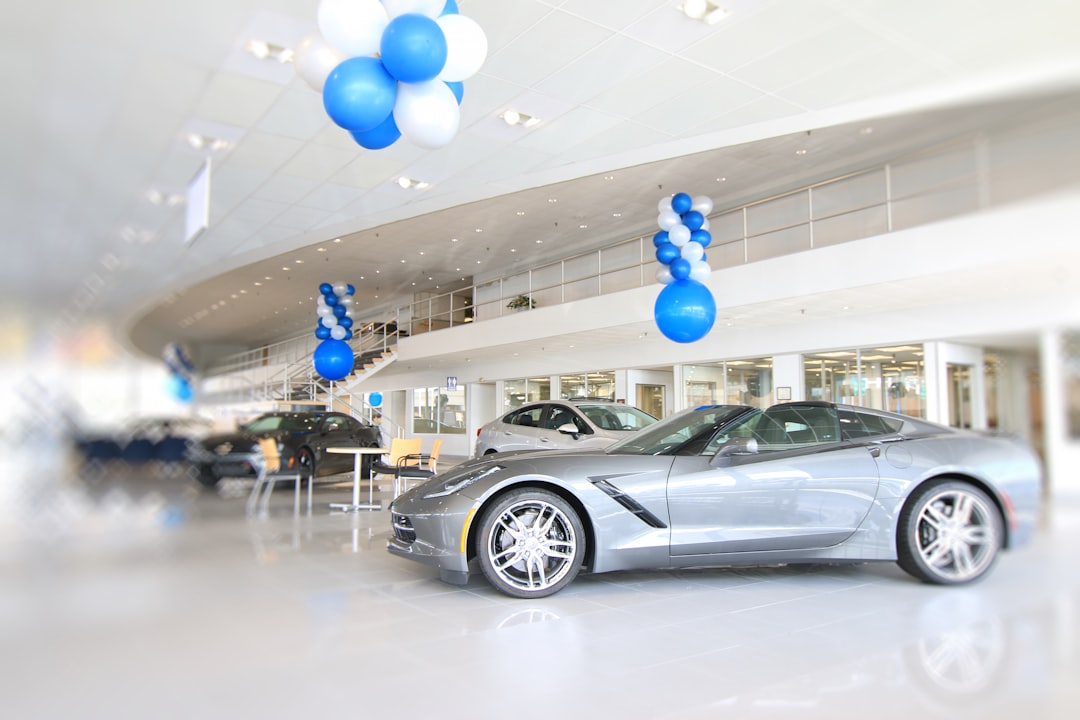
You're paying to advertise vehicles. Could be a 40-unit used-car lot in Regina, a four-rooftop Honda group in the GTA, or a trucking company in Calgary trying to move commercial units off the lot. Different businesses, same core problem: you're spending money to put vehicles in front of buyers, and you're not totally sure which spending is working.
That's what this article is about. Advertising for vehicles in Canada, across dealer types, across channels, with real numbers where we have them and honest "I don't know" where we don't. If you're specifically running a franchise dealership and want the full breakdown of digital strategy, OEM co-op, and compliance, see our complete guide to auto dealership marketing. This article is the wider view.
The Two Levers in Vehicle Advertising (and Why Most People Only Pull One)
Here's the thing. Most vehicle advertisers focus entirely on demand capture. Google Ads, AutoTrader listings, Kijiji Autos placements. Stuff that catches people who are already shopping.
That's fine. You should do that. But demand capture alone is expensive, and it gets more expensive every year as more dealers bid on the same keywords.
The second lever is demand creation. Building the kind of presence, reputation, and content that makes someone think of your lot, your brand, or your trucks before they even start typing into Google. SEO, video, social proof, community presence. Slower to build, much cheaper per lead once it's working.
Most vehicle advertisers ignore the second lever entirely. They dump budget into Google Ads and AutoTrader, wonder why their cost per lead keeps creeping up, and assume the market is just getting harder. Sometimes that's true. Often, they've just stopped building anything.
I think the dealers and trucking companies that win over a 3-5 year horizon are the ones who run both levers at the same time, even when the second one feels invisible in month one.
What Vehicle Advertising Actually Costs in Canada (Real Numbers)
Let me give you the math we actually have.
Per DataForSEO's Google Canada data, the average cost-per-click for "auto dealer digital marketing" sits around CA$19.91. That's what agencies are paying to advertise to dealers, which tells you something about how competitive the B2B side is. On the consumer side, "advertising for vehicles" runs around CA$1.03 CPC in Canada, which is genuinely low. That reflects the broad, informational nature of the query, not a hot-buyer keyword.
The keywords that cost real money are the transactional ones. "Honda dealer Toronto," "used trucks Calgary," "F-150 lease Regina." Those are where buyers are, and those are where CPCs climb fast.
Here's a worked example. Say you're a single-rooftop used-car dealer in Saskatoon running Google Ads. You set a CA$3,000/month budget. At an average CPC of, let's say, CA$4.50 for your specific inventory keywords (mid-range for Canadian used-car terms), you're buying roughly 667 clicks per month. If your Vehicle Detail Page converts at 3% to a lead, that's about 20 leads. If you close 25% of those, that's 5 deals. At CA$3,000 spend, your cost per acquisition is CA$600 per vehicle sold.
Whether CA$600 is good or terrible depends entirely on your front-end gross. If you're averaging CA$2,500 gross per unit, that's fine. If you're averaging CA$900 because you're running a high-volume, low-margin operation, that math doesn't work.
That's the piece most vehicle advertisers skip. They ask "how much should I spend on Google Ads?" before they've answered "what's my gross per unit and what can I afford to pay for a customer?"
The Channel Breakdown: Where Vehicle Ads Actually Live
Google Search Ads
Best for: buyers who are actively searching. Highest intent, highest cost.
For new-vehicle franchise dealers, OEM co-op programs can offset a significant chunk of this spend. Per Stream Companies' Kia Canada Digital Sophistication Program documentation, eligible dealers can receive 66% co-op reimbursement on qualifying digital ad spend. The catch is you have to use approved vendors, follow OEM creative guidelines, and submit the right paperwork. If you're not claiming your co-op, you're leaving real money on the table.
For trucking and commercial vehicle dealers, Google Search is still the play, but the keywords are different. "Trucking company advertising" is a thin market in Canada (around 10 searches/month per DataForSEO), which means the competition is low but so is the volume. You're likely running broader terms around specific makes, fleet financing, or service availability.
Inventory Listing Platforms (AutoTrader, CarGurus, Kijiji Autos)
These platforms generate leads. They also eat margin. One dealer I've spoken with put it plainly: "I stopped spending on TrueCar because I was paying $400 a lead on deals that grossed $800. That's not a business, that's charity to a classifieds site."
That's not a universal experience, but it's a real risk. The math on per-lead platforms only works if your average deal gross is high enough to absorb the lead cost AND you're not paying for the same buyer twice (once from the platform, once from your own Google Ads).
The shift a lot of dealers are making right now is building first-party inbound lead flow through their own website and Google Business Profile, so they're less dependent on platforms that take a percentage of every deal.
SEO and Organic Search
Slower. Cheaper per lead once it's working. And the only channel where the work you do in month 3 is still paying off in month 18.
For trucking company marketing, organic search is underused. Most trucking companies have genuinely terrible websites with no content strategy, which means a modest SEO investment can move the needle faster than it would in a more competitive space.
In my experience, vehicle businesses that publish consistent, specific content (inventory updates, financing explainers, service area pages, vehicle comparison posts) tend to generate meaningfully more organic leads within 12-18 months than businesses that treat their website as a digital business card.
Video
This is where trucking company advertising is genuinely underserved. A 90-second walkaround of a specific commercial truck, posted to YouTube with a proper title and description, can rank for very specific queries ("2023 Kenworth T680 for sale Alberta") that have almost no competition. Low volume, yes. But the buyer who finds that video is not browsing. They're buying.
For dealerships, video is increasingly expected on Vehicle Detail Pages. Buyers who watch a VDP video convert at higher rates than buyers who only see photos, though the exact numbers vary by platform and inventory type.
Canadian Compliance Rules You Can't Ignore When Advertising Vehicles
This section matters. A lot.
Ontario (OMVIC): Every advertised price must be all-in. That means all dealer fees and charges included, with only HST and licensing explicitly excluded. You can't hide a $499 documentation fee in the fine print. You can't use "see dealer for details" as a disclaimer on a price claim. OMVIC's advertising guidelines are specific, and they're enforced. OMVIC launched a mandatory CPD (continuing professional development) program in April 2026 covering advertising compliance, required for licence renewals from July 1, 2026.
British Columbia (MVSABC): Similar all-in pricing requirements with specific language required for certified pre-owned designations. If you're running ads that say "certified" without meeting the MVSABC's definition of what that means, you're exposed.
Alberta (MVIA): Generally less restrictive than Ontario or BC, but "from" pricing without proper disclaimers is still prohibited. You can't claim a lowest-price guarantee without substantiation.
Quebec (OPC): Bilingual advertising requirements apply. Financing claims need full disclosure: total cost, APR, terms. The Consumer Protection Act in Quebec has teeth, and the Office de la protection du consommateur enforces it.
Federal (Competition Bureau): The Competition Act's deceptive marketing provisions apply nationally. False savings claims, hidden fees, bait-and-switch advertising. Fines can reach CA$10 million per incident. The Competition Bureau has been actively enforcing in automotive.
CASL: Cold email to conquest customers requires express or implied consent. If your agency is suggesting you blast a list of competitor customers with a promotional email, that's a CASL problem, not a marketing strategy.
Here's the practical implication: if you hire a marketing agency that isn't familiar with the specific provincial rules in YOUR market, you're carrying the compliance risk. The agency gets paid regardless. You get the fine.
How to Build a Vehicle Advertising Plan That Actually Tracks (Week by Week)
This is the part most guides skip. Not what to do, but when and in what order.
Weeks 1-2: Audit before you spend. Pull your Google Analytics or your DMS data. Where are your current leads actually coming from? If you don't know, that's the first problem. Set up proper UTM tracking on every paid channel before you run another ad. If your website is on Dealer.com or DealerOn, understand what your platform lets you modify and what it locks down. Some third-party SEO agencies can't touch certain elements of OEM-mandated platforms. Know that before you sign anything.
Weeks 3-4: Fix the foundation. Check your Google Business Profile. Is it complete? Are your hours correct? Do you have recent photos? Businesses with complete GBPs consistently outperform incomplete ones in local search. This costs nothing and typically takes a few hours. Also check your website speed, especially on mobile. A slow VDP page is a lead you just lost.
Month 2: Launch paid campaigns with proper tracking. Start with Google Search for your highest-margin inventory. Not everything, not a broad "cars for sale" campaign. Specific makes, models, and trims that match what you actually have in stock and what actually generates gross. Set conversion tracking to fire on form submissions AND phone calls. If you're not tracking calls, you're missing a significant portion of your leads.
Month 2-3: Reputation, reviews, and organic. Actively ask for Google reviews from every satisfied buyer. Not through a fake-review service (more on that below), but through a simple post-sale process: a text or email with a direct link to your GBP review page. Reputation management is its own discipline, and if you want the full picture on how to do it without getting your GBP suspended, see our guide to dealership reputation management.
Month 3 onward: Measure, adjust, hold the line. Pull your cost per lead by channel. Compare it to your gross per unit. Kill what doesn't work. Double what does. This sounds obvious, but most vehicle advertisers check their ad spend monthly and their actual deal attribution never. Those two numbers need to be in the same conversation.
Red Flags to Watch When Hiring a Vehicle Advertising Agency
This is the close that matters most for this article.
They can't tell you your cost per acquisition. Impressions and clicks are not business metrics. If your agency's monthly report doesn't connect ad spend to actual leads to actual deals, the report is decorative.
They're not familiar with your province's advertising rules. An Ontario dealer running OMVIC-non-compliant ads is the agency's oversight and the dealer's liability. Ask directly: "Have you run campaigns for dealers in Ontario/BC/Alberta/Quebec?" Then ask a follow-up question about a specific rule. See if they know it.
They're managing your Google Ads on a percentage-of-spend model. This creates an incentive to spend more, not to spend efficiently. Flat-fee retainers align the agency's interest with yours. For a full breakdown of how PPC for dealerships should actually be structured, see our dealership PPC and Google Ads guide.
They're promising review volume without a process you understand. The fake-review risk is real. One dealer group lost their Google Business Profile for 60 days after a reputation vendor generated fake 5-star reviews. Google caught it. The OEM withheld their Q3 bonus because their public rating dropped below 4.0. That was a CA$180,000 mistake. Don't let an agency control your GBP login without you understanding exactly what they're doing.
They can't explain the OEM co-op process. If you're a franchise dealer and your agency has never navigated an OEM co-op program, you're leaving reimbursement money unclaimed and potentially running non-compliant creative.
Related Reading
- Auto Dealership Marketing: Complete Digital Strategy Guide
- Dealership Reputation Management Services: Complete Guide
- Dealership PPC & Car Dealer Google Ads Strategy
- [trucking-company-marketing-guide]
- [vehicle-advertising-compliance-canada]